
Wargaming Weekly #069: Are you looking for a micro-wargame about recruiting a spy?
Introducing “Close Access” – my debut intelligence wargame, a re-skinning of Curtis Miller’s “Ambush from the Depths”


I recently re-visited the third wargame I ever played!
I have been aware of the digital version of Ambush from the Depths by Curtis Miller ever since he shared it last year but I hadn’t found the time to actually give it a spin until this past week.
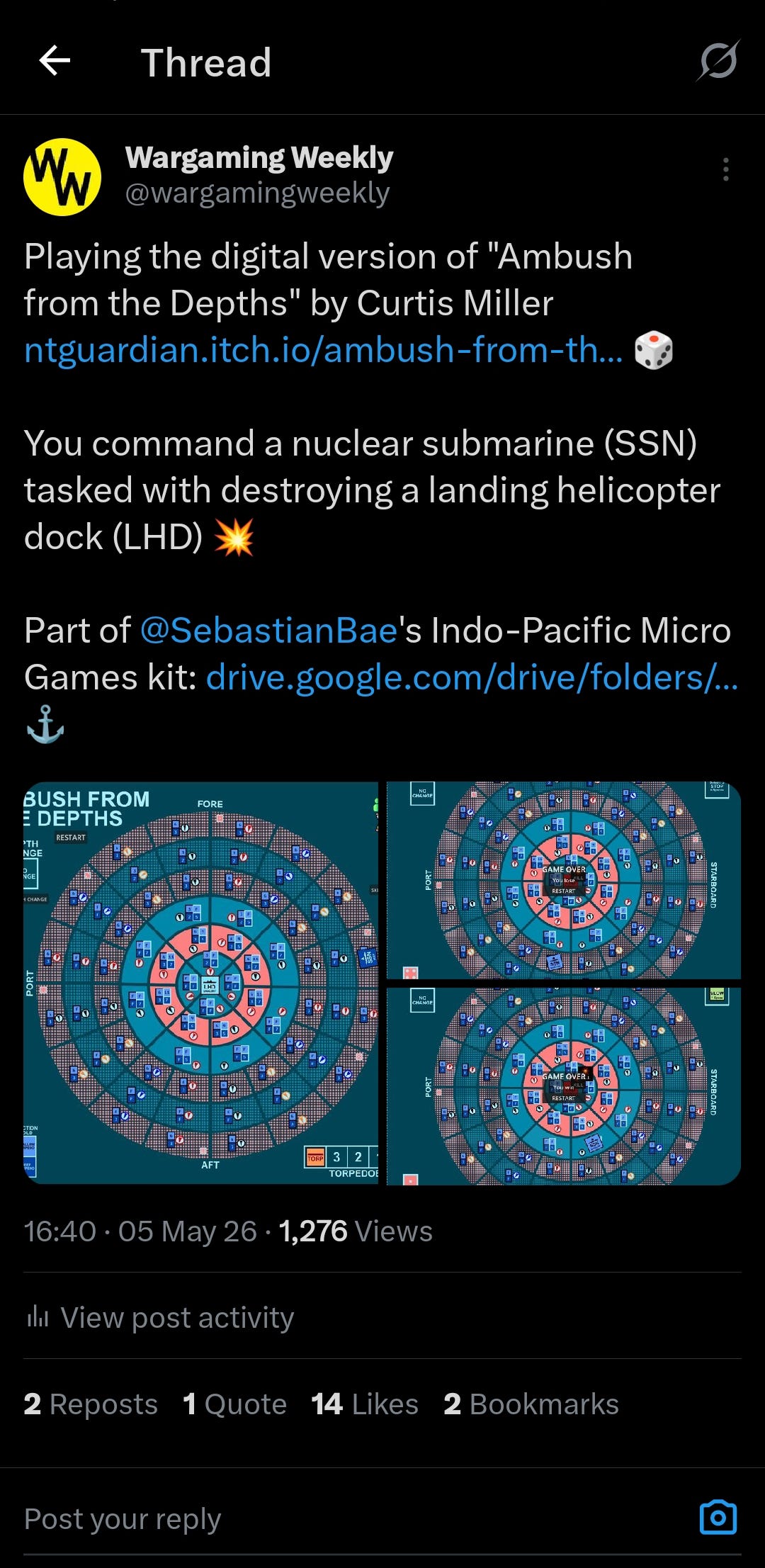
Why last week in particular? Well, reminding myself of the game mechanics underneath Ambush from the Depths was part of my design process for my latest micro-wargame called Close Access.
So, what the heck is Close Access all about?
Close Access is designed to model some basic principles of how social proximity, institutional visibility, and cover management influence an intelligence officer’s approach to a recruitment target.
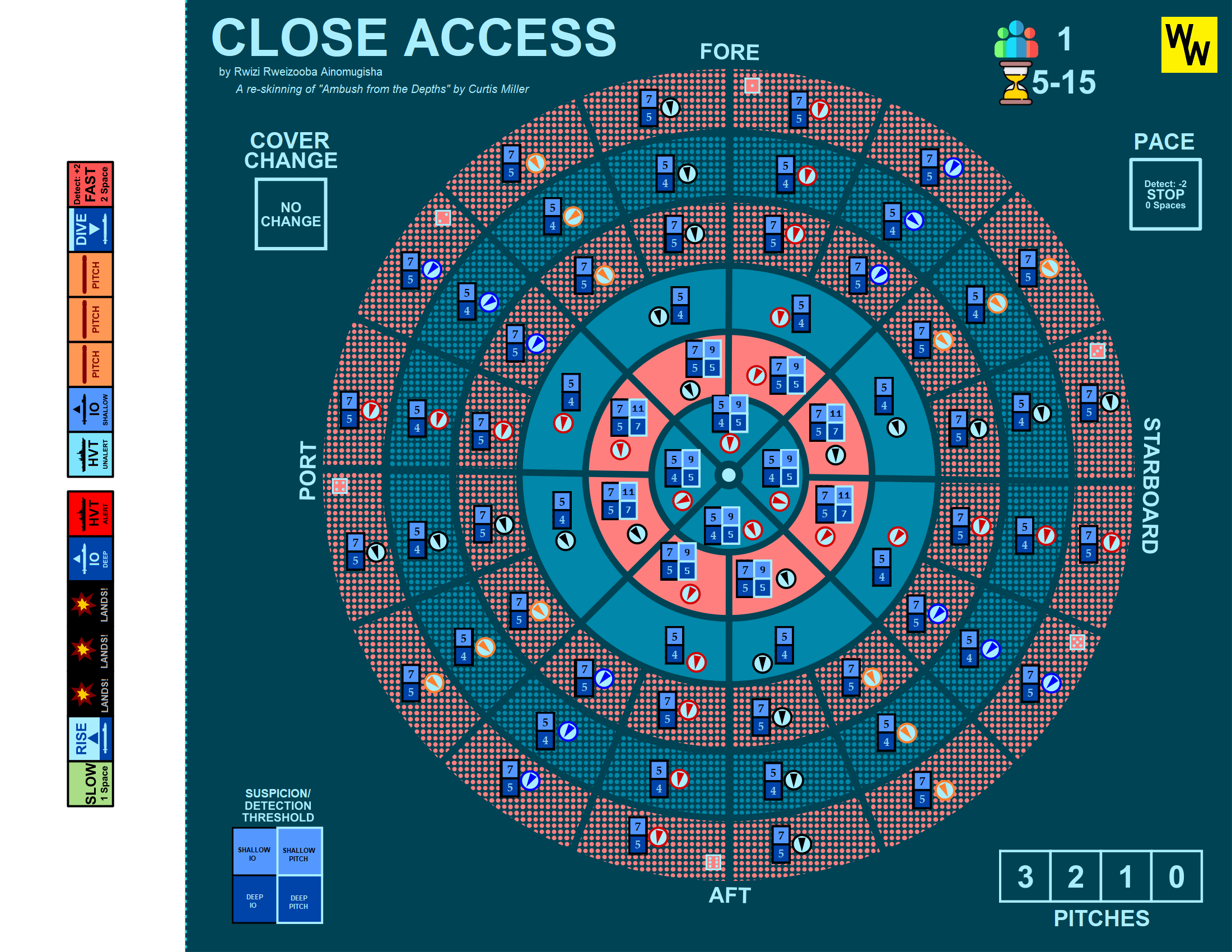
Download and print the full game PDF here to play Close Access. Let me know what you think in the comments below!
SPONSOR THIS NEWSLETTER: Is your organization interested in becoming an official Wargaming Weekly sponsor? Please reach out to me today via X, LinkedIn or Bluesky to discuss our potential partnership! You can also support Wargaming Weekly on Patreon for as little as $5 per month!

SPECIAL SALUTE to my first top-tier patron: Christopher Nordahl
What inspired me to design Close Access?
1. John Kiriakou
I unfortunately don’t remember which exact podcast it was but in one of the dozens of John Kiriakou’s interviews on YouTube, the internet’s favorite ex-CIA spy spoke about penetrating a Middle Eastern royal’s social circles to recruit him as an intelligence asset and for some reason… my mind immediately flashed back to the map board of Ambush from the Depths!
2. I was feeling so lazy
After the cognitive labor that it took to complete my last micro-wargame design The Shadow Fleet, I was in no mood to build from scratch again. I had to go back to remixing one of the micro-wargames that I have previously played. Actually, even remixing felt like too much work this time, all I could afford to do was simply re-skin. And Ambush from the Depths was the perfect candidate.
3. Francesca de Rosa
In her recent webinar for the Georgetown University Wargaming Society (GUWS) where she explored her concept of knowledge acquisition analytical games (K2AGs) in detail, Francesca de Rosa talked about the utility creating wargame designs that can easily be repurposed across contexts.
This was the perfect intellectual justification for my aforementioned laziness, I saw re-skinning Ambush from the Depths from (anti-)submarine warfare to (counter)intelligence as the perfect case study!
So, what’s different about Close Access?
1. Theme
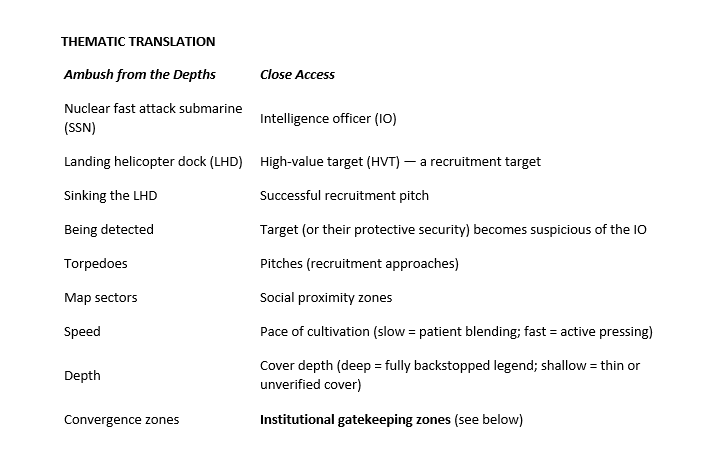
(Counter)intelligence maps surprisingly well onto (anti-)submarine warfare. The most important thematic translation in Close Access from Ambush from the Depths is the convergence zone — and it maps with surprising precision to the institutional gatekeeping zone that Claude cooked up for me.
2. Detection rolls
I tweaked the suspicion/detection rolls such that there’s no single sector on the map board where it’s always an automatic failure unlike in Ambush from the Depths (since I feel that’s more thematically accurate) such that even with the -2 bonus from making no movement, there’s still a possibility of detection.
3. Effective range
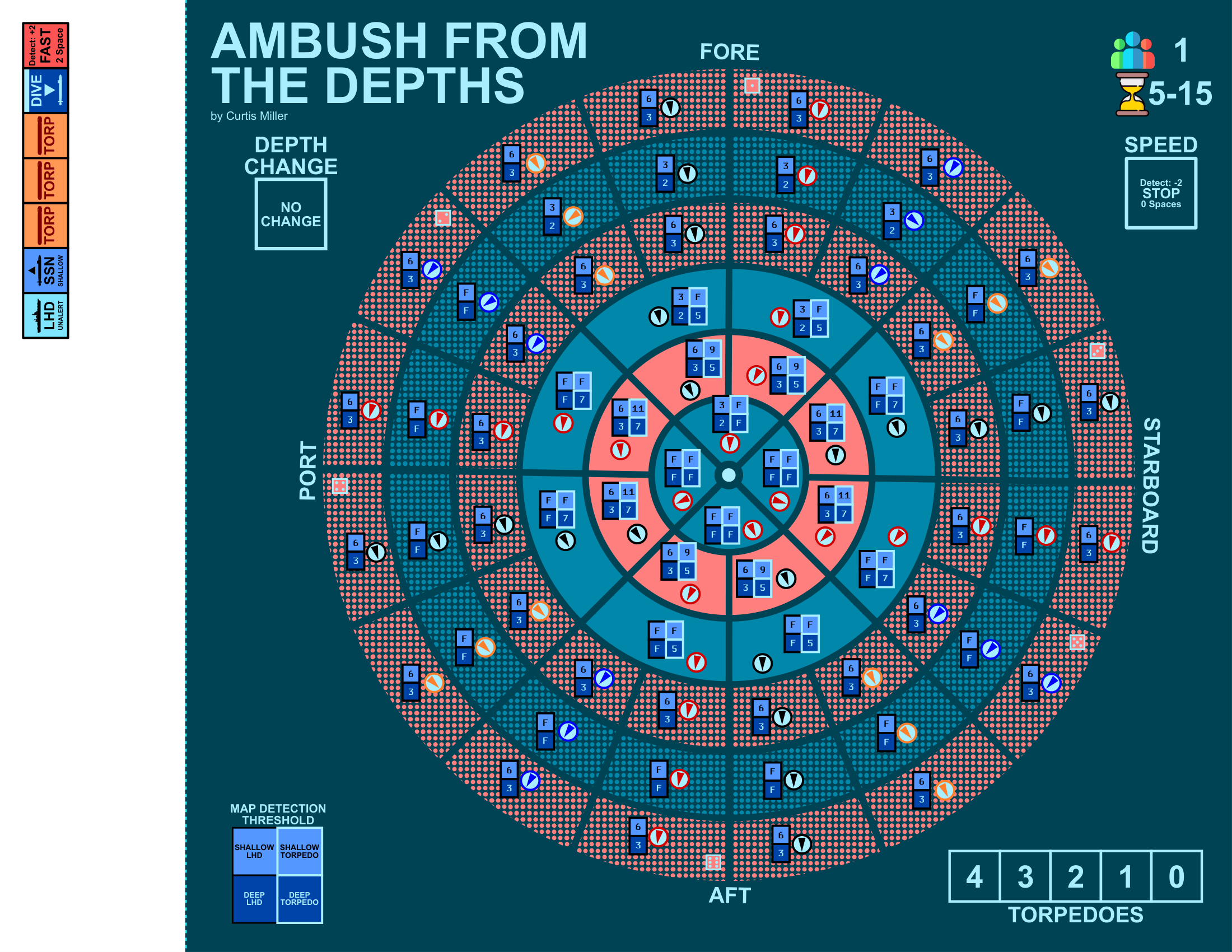
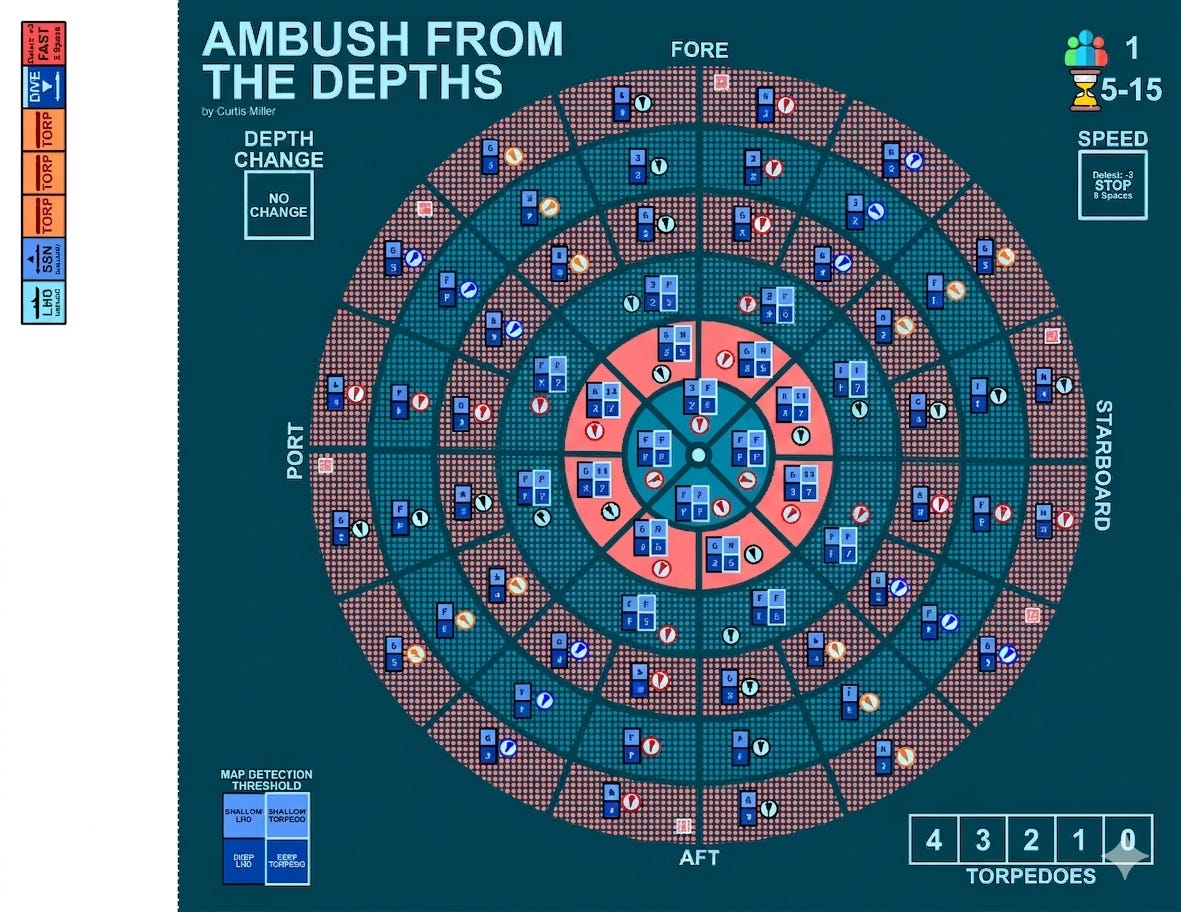
With Ambush from the Depths, the three inner rings (solid-color) are within torpedo firing range while the three outer rings (dot-pattern) are outside torpedo firing range.
With Close Access, even though I failed to do away with the solid-color and dot-pattern distinction using Gemini/Nano Banana, the two inner rings (where sectors have 4 suspicion/detection boxes each) are within the recruitment pitch range while the four outer rings (where sectors have 2 suspicion/detection boxes each) are outside the recruitment pitch range.
4. Number of attempts
With Ambush from the Depths, your submarine (SSN) has four torpedoes to fire at the landing helicopter dock (LHD) while with Close Access, your intelligence officer (IO) has only three recruitment pitches to “fire” at the high-value target (HVT).
5. What alerts security
With Ambush from the Depths, the LHD is alerted as soon as a torpedo is fired while with Close Access, when a pitch is unsuccessful, you roll 1d6. On a 4 or less, the approach was recognized as hostile and the HVT’s security is alerted. On a 5–6, the target deflected without recognizing the intent — no alert.
I felt this was more thematically accurate since I imagine an unsuccessful pitch wouldn’t necessarily automatically alert the HVT’s security unlike a torpedo that automatically gets detected by sonar once it’s fired.
6. Possible loss conditions
Ambush from the Depths has only two possible loss conditions:
The LHD’s security begins the SSN’s turn on alert and the SSN has not successfully sunk the LHD by the end of that turn.
The SSN leaves the board.
On the other hand, Close Access has three possible loss conditions:
The HVT’s security begins the IO’s turn on alert and the IO has not completed recruitment by the end of that turn.
The IO leaves the board — the operation is lost, the HVT is too far beyond range.
The IO runs out of pitch attempts before successfully recruiting the HVT.
And what’s the same as in Ambush from the Depths?
When I tell you that Close Access is a re-skinning of Ambush from the Depths, I mean it’s a really thin re-skinning! You can see the similarities immediately:
Same number of players (solitaire)
Same number (and core function) of rings and sectors
Same number (and core function) of boxes and tracks
Same number (and core function) of counters
Same sequence of play
Same maneuver mechanism
Same naval direction terms
Same (anti-)submarine warfare icons (I was too lazy to change them!)
Why am I proud of Close Access?
1. I didn’t have to play-test it 20 times like Clint Warren-Davey says to publish it!
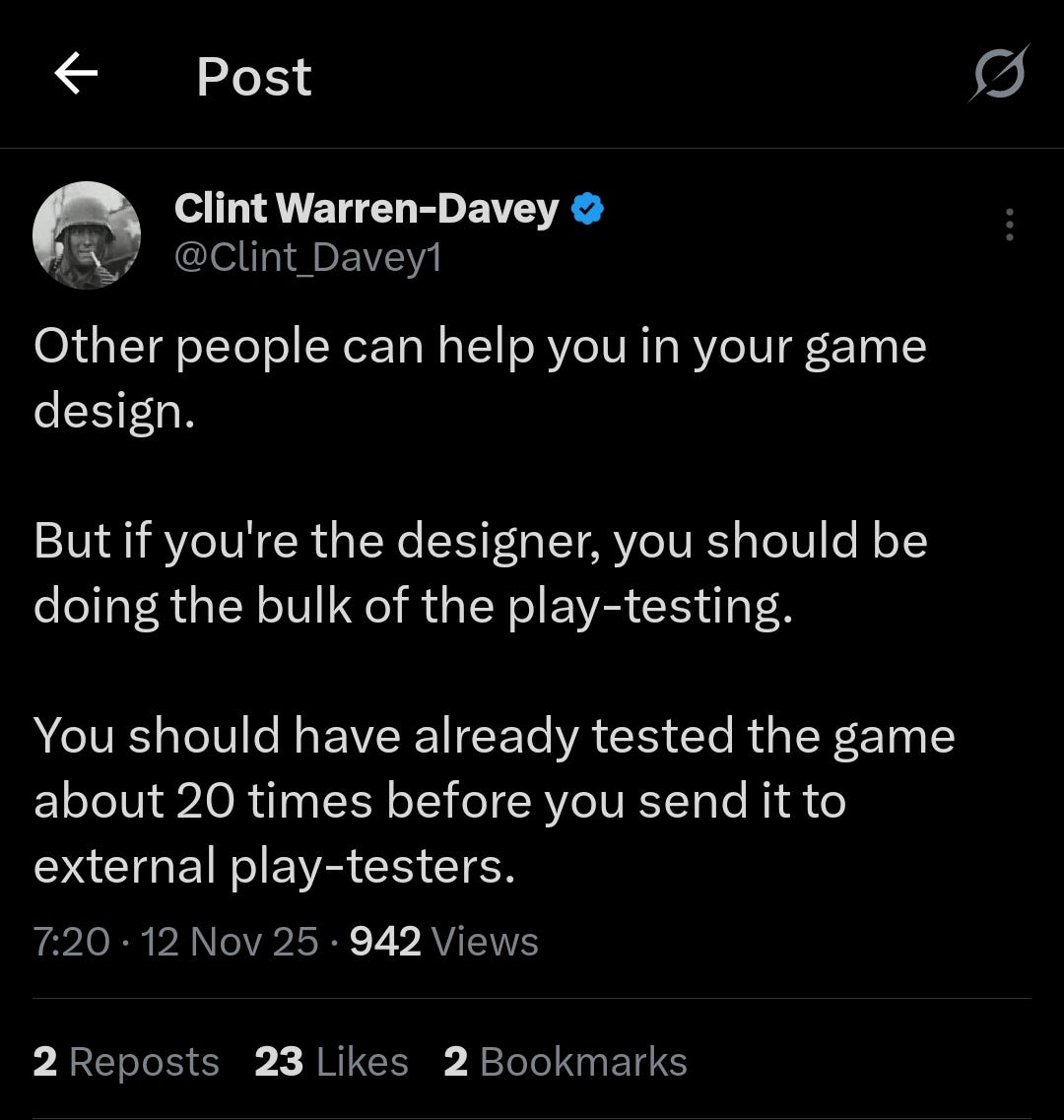
Yes, I know I said I’m now singing in the choir of the Clint Warren-Davey’s church of play-testing your own game at least 20 times before sharing it with anyone else but because Close Access is such a thin re-skinning of Ambush from the Depths, I’m extremely confident that the underlying mechanics are still very sound so the game will play smoothly.
Plus, to be honest, despite flipping my room over, I couldn’t find my print ‘n’ play copy of Ambush from the Depths so I lazily took that as sign from the heavens to just skip play-testing this time.
Also, I was already running late!
That said, I reckon winning in Close Access will definitely be much harder since the player gets fewer “shots on target”, has to come closer to make said shots, and has to deal with higher detection rolls all throughout the map. I’ll find out when I eventually come around to playing it myself.
2. The game feels authentic… at least to me!
Yes, I haven’t actually played it yet and yes, I don’t know anything about (counter)intelligence outside the spy movies, documentaries and podcasts that I’ve watched but this game still feels like a solid representation of how approaching and recruiting an intelligence asset actually goes.
3. It’s the perfect ode to one of my favorite designers!
I still remember how excited I was to play Ambush from the Depths when I first discovered Sebastian Bae’s Indo-Pacific Micro Games collection – from its uniquely beautiful map board to its uniquely complex game theme, it was such a delicious cognitive adventure for me!
They say “imitation is the highest form of flattery” so I feel like this re-skinning is the perfect hat-tip to Curtis’ wonderful work with Ambush from the Depths.
How have I used AI to design Close Access?
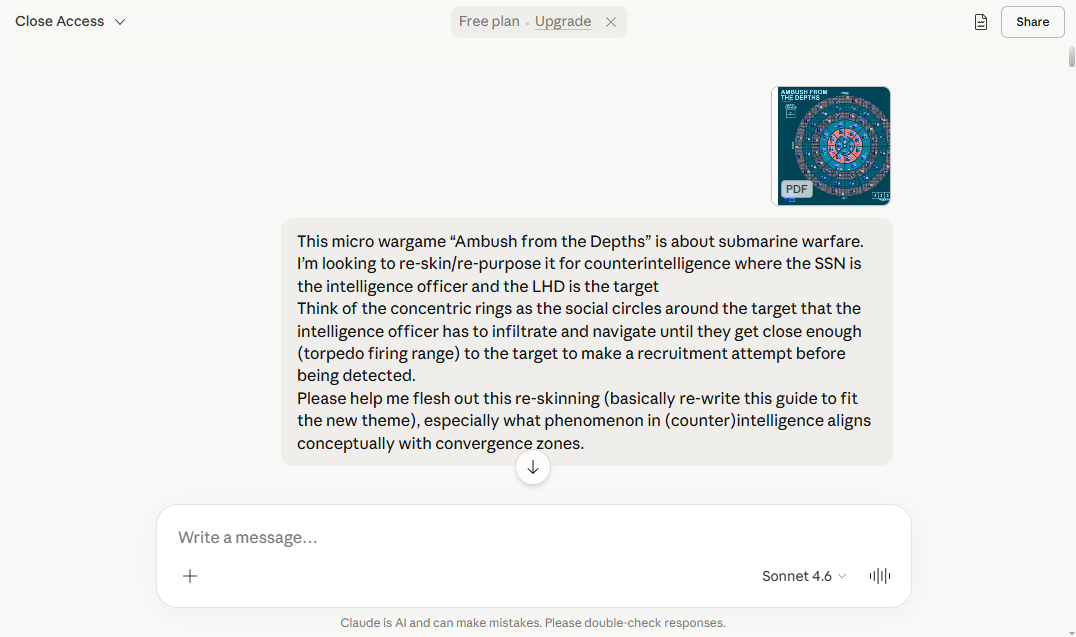
Claude was my brainstorming assistant as usual. You can see our whole chat here. It gave me the perfect thematic translation for convergence zones and solid ruleset that only needed minor tweaks from me. And I have to say, it absolutely out-did itself coming up with that recognition rule after an unsuccessful pitch!
Gemini/Nano Banana, on the other hand, failed to help me add a dot-pattern to the third inner ring without completely ruining everything else, particularly the numbers in the detection boxes.
What wargame design lessons have I solidified from Close Access?
1. Play more games!
As usual, this is the most cliché eyeroll-worthy advice that experienced wargame designers always share but it’s actually true… you need to play more games to get good at designing games! I wouldn’t have had that eureka moment while listening to John Kiriakou if I hadn’t repeatedly played Ambush from the Depths to the point where it was imprinted that deeply in my memory.
2. Lean into your laziness!
Sometimes, less is more. Yes, this is a slippery slope, but there’s definitely some value in being lazy enough to only give a light edit to an existing wargame design and re-skin it for a different theme/topic.
3. AI has its limits!
As shared above, while Claude managed to come in very clutch for me as a brainstorming assistant, Gemini/Nano Banana, fell completely flat despite my success with it in some of my previous designs.
OPEN TO WORK: Do you need help with content marketing or game co-designing for your wargaming services/products? I’m currently open to gig work in defense, academic, civic or business wargaming as a part-time remote freelancer (10 – 30 hours per week). Please DM me on LinkedIn via the Wargaming Weekly page or my personal profile to book a free consultation call. Like the Gen-Z kids like to say… lemme cook!
Wait! What’s hiding in that Fiction Corner?
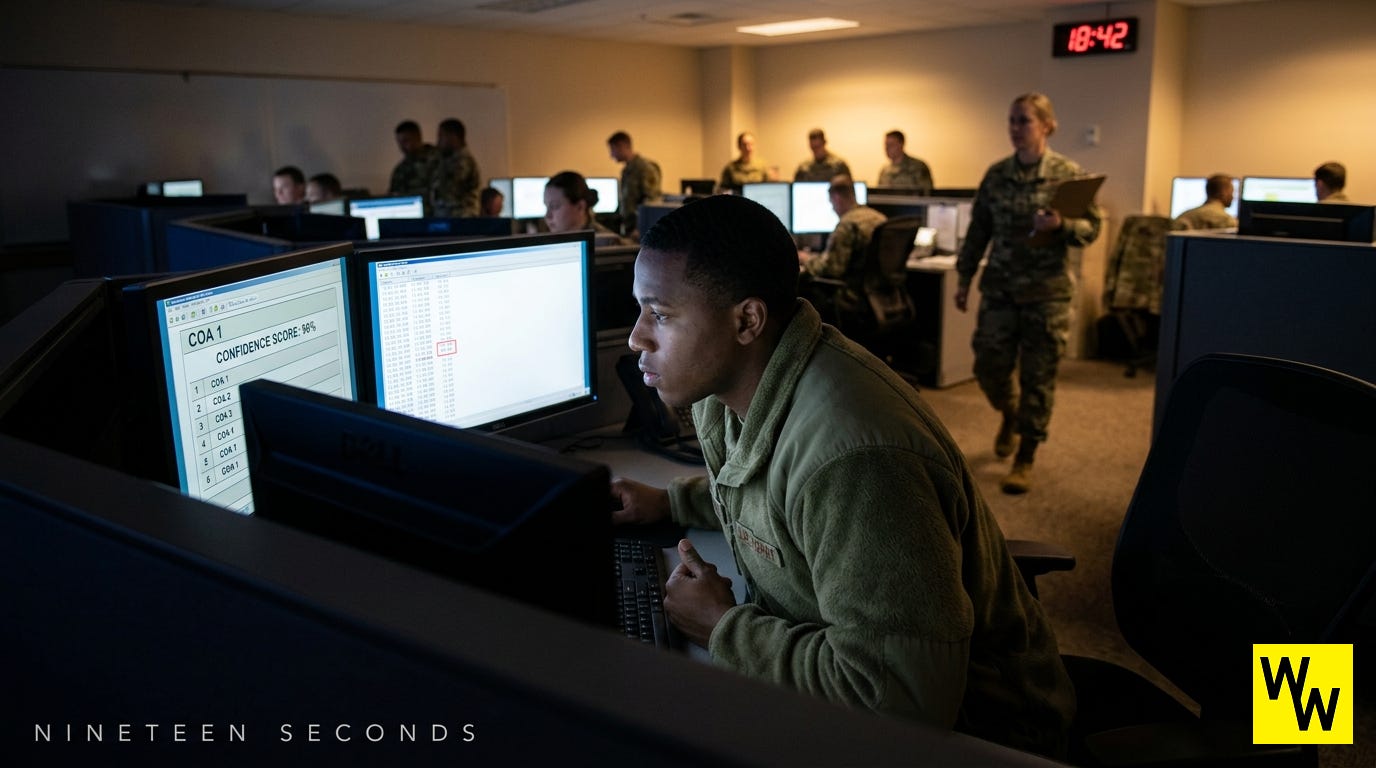
Staff Sergeant Kwame Asante has nineteen seconds before the session evaluator records the AI’s top-ranked course of action as a valid experimental result — and he is the only person in the room who knows the confidence score is built on corrupted data. The glitch in the sensor feed is one he flagged three months ago in a maintenance report that was acknowledged and filed. The COA will never be executed; this is an experiment, nobody will be harmed. What enters the record tonight, however, will be cited in documents he will never read, by people who will never know his name, in decisions that will matter. Nineteen seconds is both enough time and no time at all.
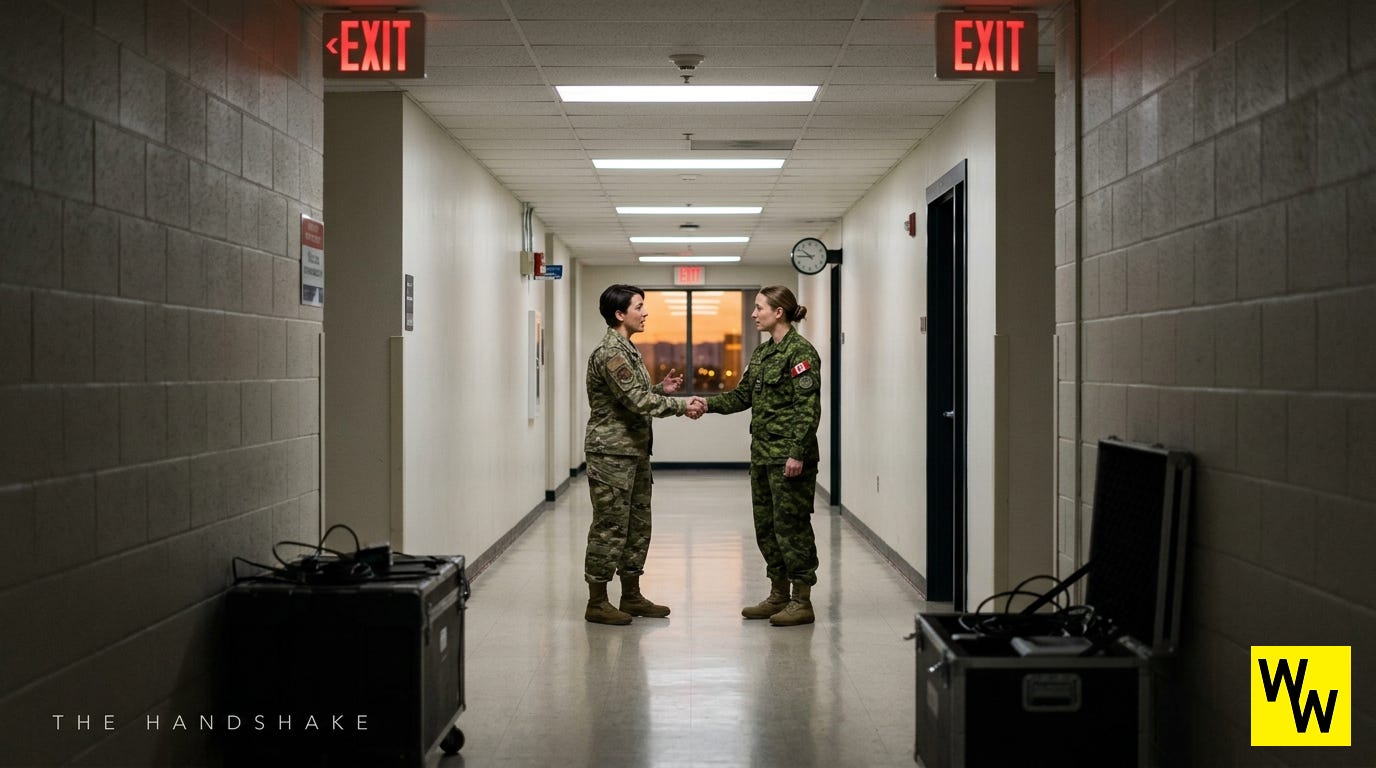
Major Kate Osei and Captain Denise Williams have spent two weeks in the same building, eating the same bad lunches, solving the same bureaucratic frictions, and they are both due on separate calls in twenty minutes when they stop in the corridor outside the main conference room and have the conversation neither of them planned to have. Kate says something she has not said to anyone in the programme — something about what the coalition participation actually was versus what it was designed to be — and Dennis asks her what the version she’ll put in the AAR leaves out. The corridor empties around them. Neither of them moves. The handshake at the end is eleven minutes away and will mean something neither of them has a word for yet.
Lastly… what’s that over there in the Business Corner?
Tetiana Kobzar (creator of the Comportance Framework) hosted by Rob Alvarez on the Professor Game podcast.
Also… this past weekend, I kinda went viral on Ugandan TikTok! My announcement video for Social Funds, the gamified social finance app that I’ve been vibe-coding since last December, is about to break the 80k views mark!

I’m so glad to finally be at this stage where I’m ready to share the app with the general public, and that it has been received so enthusiastically. The pursuit of product-market fit continues!
Yours in hex,
Rwizi.
ABOUT THE AUTHOR:
Rwizi Rweizooba Ainomugisha is a freelance wargame researcher, analyst and designer. With a background of over 10 years in the B2B marketing and fintech startup spaces, Rwizi is also building Social Funds, the gamified social finance app designed to help young Ugandans budget, save, and fund their goals together.

There are obviously downsides and ethical concerns around generative AI, but it is interesting to explore where it can benefit creativity, and where it is less effective, so thank you for sharing its use in your design process!