

First of all, it’s great to be back from my Substack suspension! Yes, I missed you too!
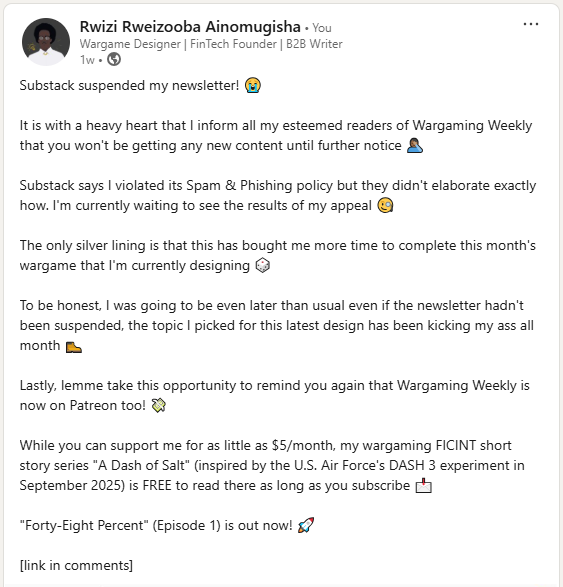
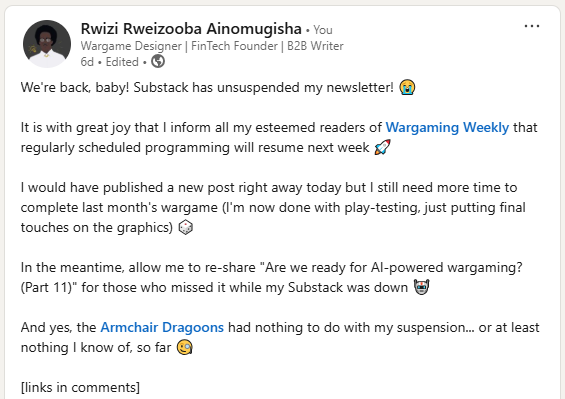
But I’m not too mad at it. Like I said, even if they hadn’t suspended me, I wouldn’t have had my micro-wargame design for March (titled The Shadow Fleet) ready in time ‘cause at the end of the month, I had just started play-testing the final version after spending all month hitting a wall with overly complex AI-generated models.
So, what the heck is The Shadow Fleet all about?
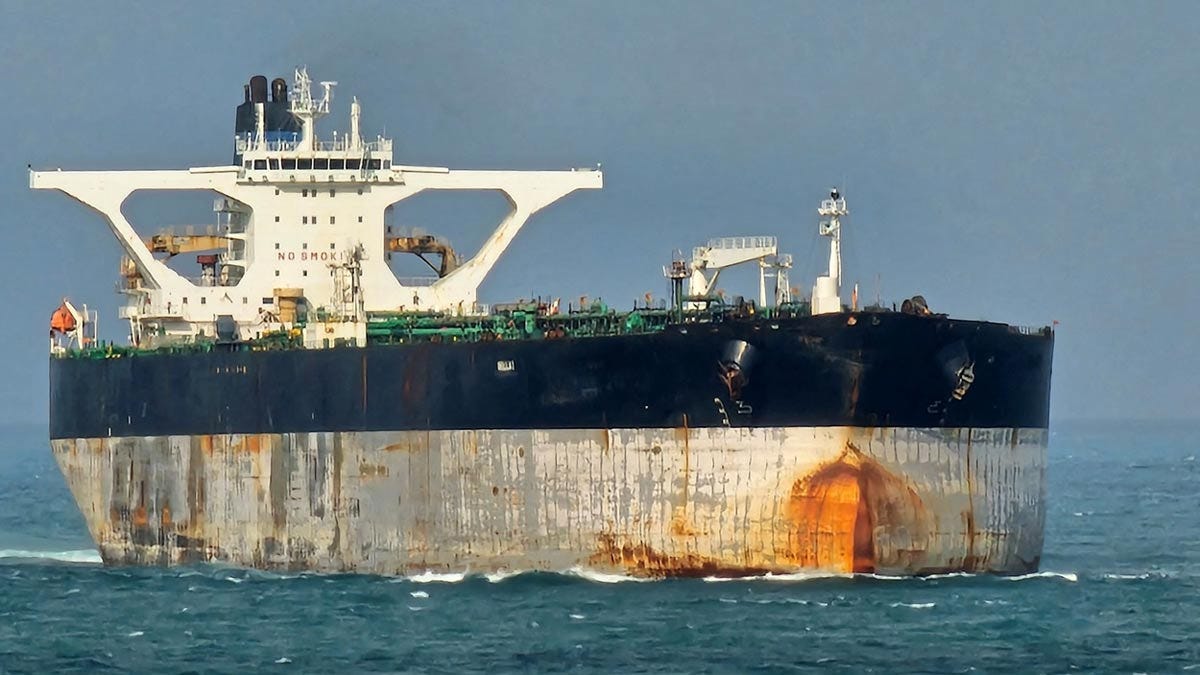
It’s right there in the title: Russia’s sanction-dodging oil tankers.
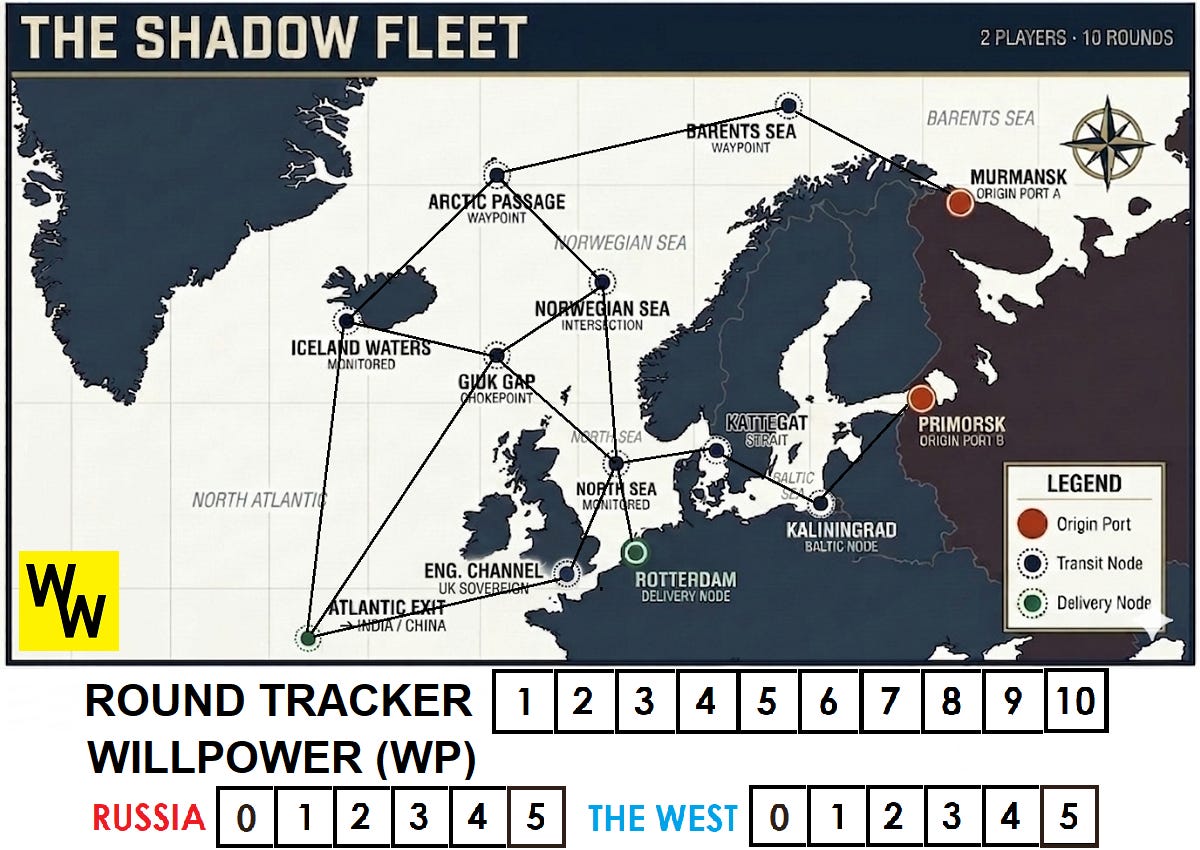
Download and print the full game PDF here to play The Shadow Fleet. Let me know what you think in the comments below!
SPONSOR THIS NEWSLETTER: Is your organization interested in becoming an official Wargaming Weekly sponsor? Please reach out to me today via X, LinkedIn or Bluesky to discuss our potential partnership! You can also support Wargaming Weekly on Patreon for as little as $5 per month!
SPECIAL SALUTE to my first top-tier patron: Christopher Nordahl. Thank you so much!
What inspired me to design The Shadow Fleet?
1. The Shadow Lines: Russia (by yours truly)
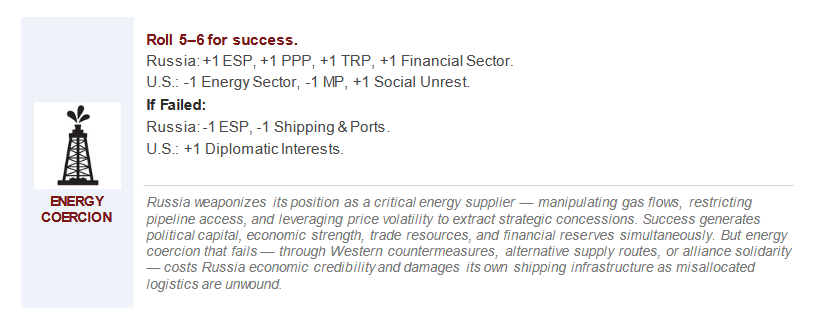
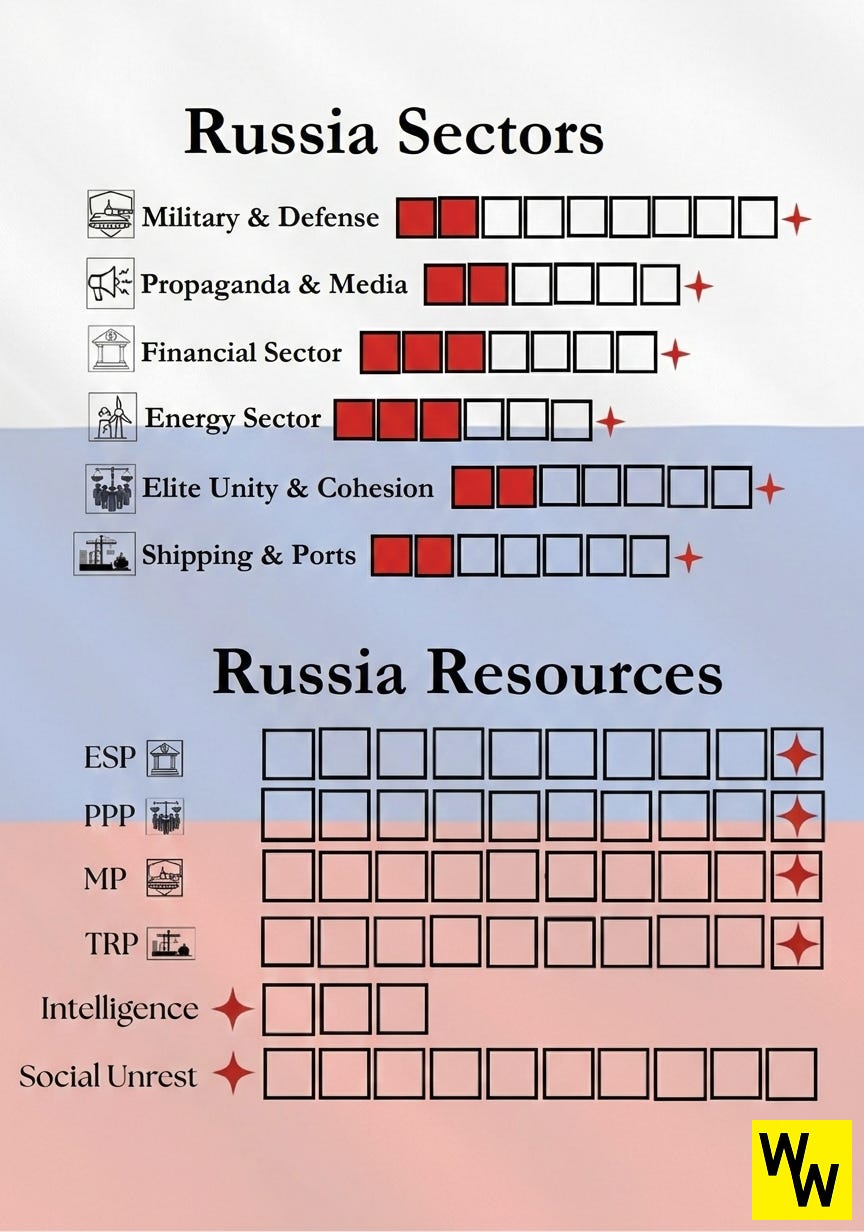
The idea for The Shadow Fleet came to me when I was still working on my last micro-wargame, The Shadow Lines: Russia. As I was putting together Russia’s Energy Coercion action as well as the Energy and Shipping & Ports sectors, I knew it was only right that my next micro-wargame be about Russia’s shadow fleet.
2. Center for Maritime Strategy
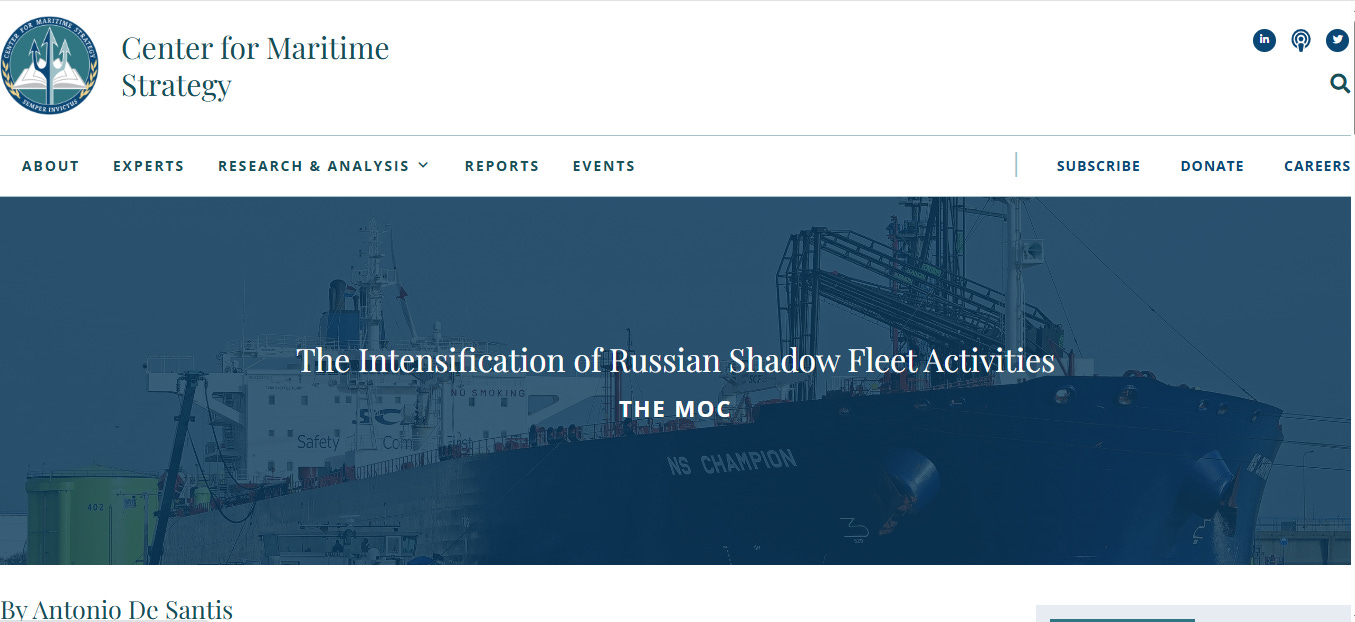
I had watched a handful of YouTube videos about Russia’s shadow fleet but this recent Center for Maritime Strategy article by Antonio De Santis titled The Intensification of Russian Shadow Fleet Activities became my authoritative anchor for designing this game.
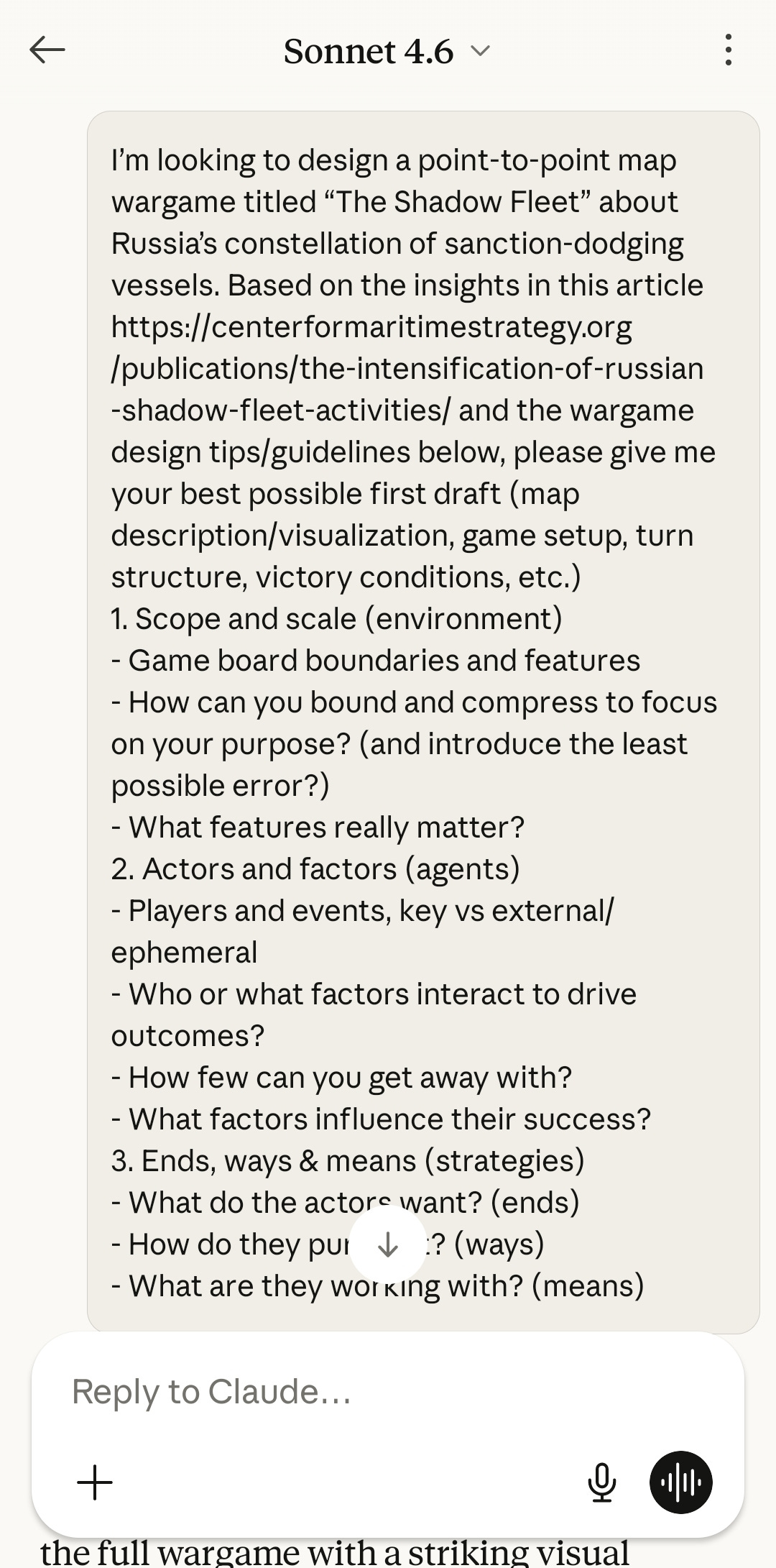
3. The Shadow Lines (by Vilte Radzyte)
As the original inspiration for The Shadow Lines: Russia, Viltė Radzytė’s The Shadow Lines continued to influence me as I designed The Shadow Fleet:
- rounds split into back and forth turns
- action menu with die roll for success for some actions and none for others
- critical resource that offers advantage between rounds (willpower in this case)
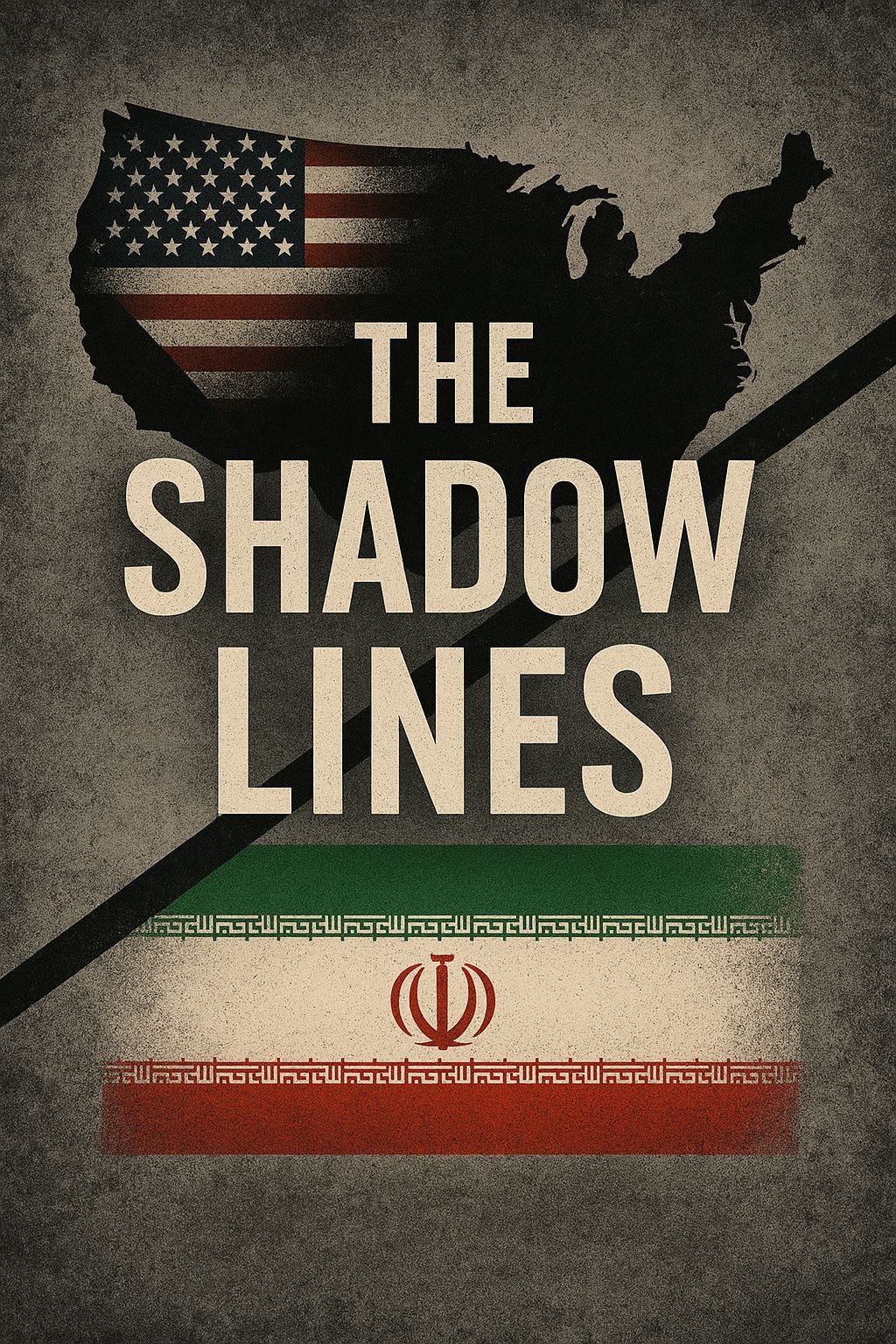
4. Supply and Steel (by Fight Club International)
Despite starting it last year, I actually still hadn’t completed a full play-through of Supply and Steel by the time I started designing The Shadow Fleet (because I kept messing up the retreat rule) but I was able to borrow the point-to-point design (abstracting geography and distance while still offering visual immersion with a realistic map).
5. Twilight Struggle (by Jason Matthews and Ananda Gupta)
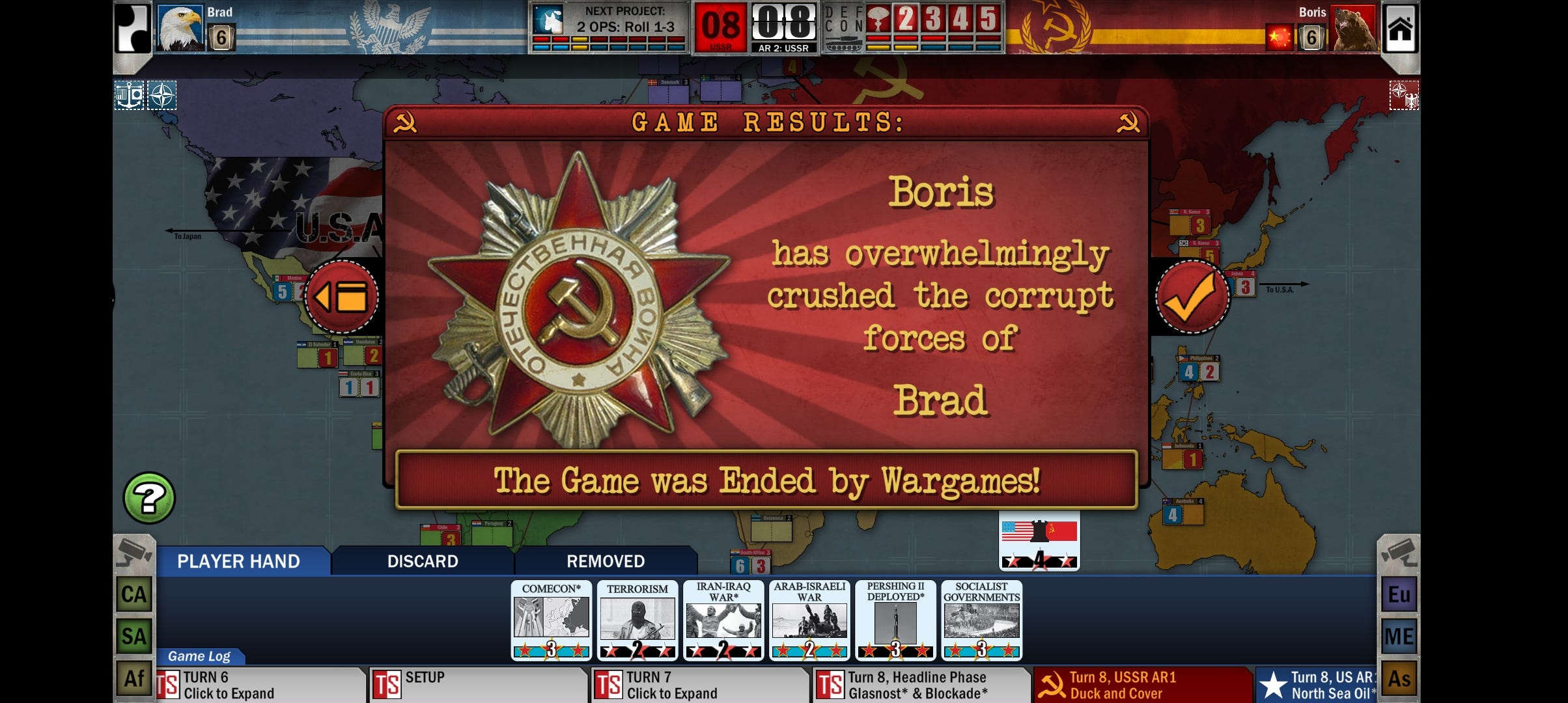
Twilight Struggle is still my favorite card-driven wargame. In fact, I recently lost by the Wargames card for my first time ever and it weirdly felt like a win!
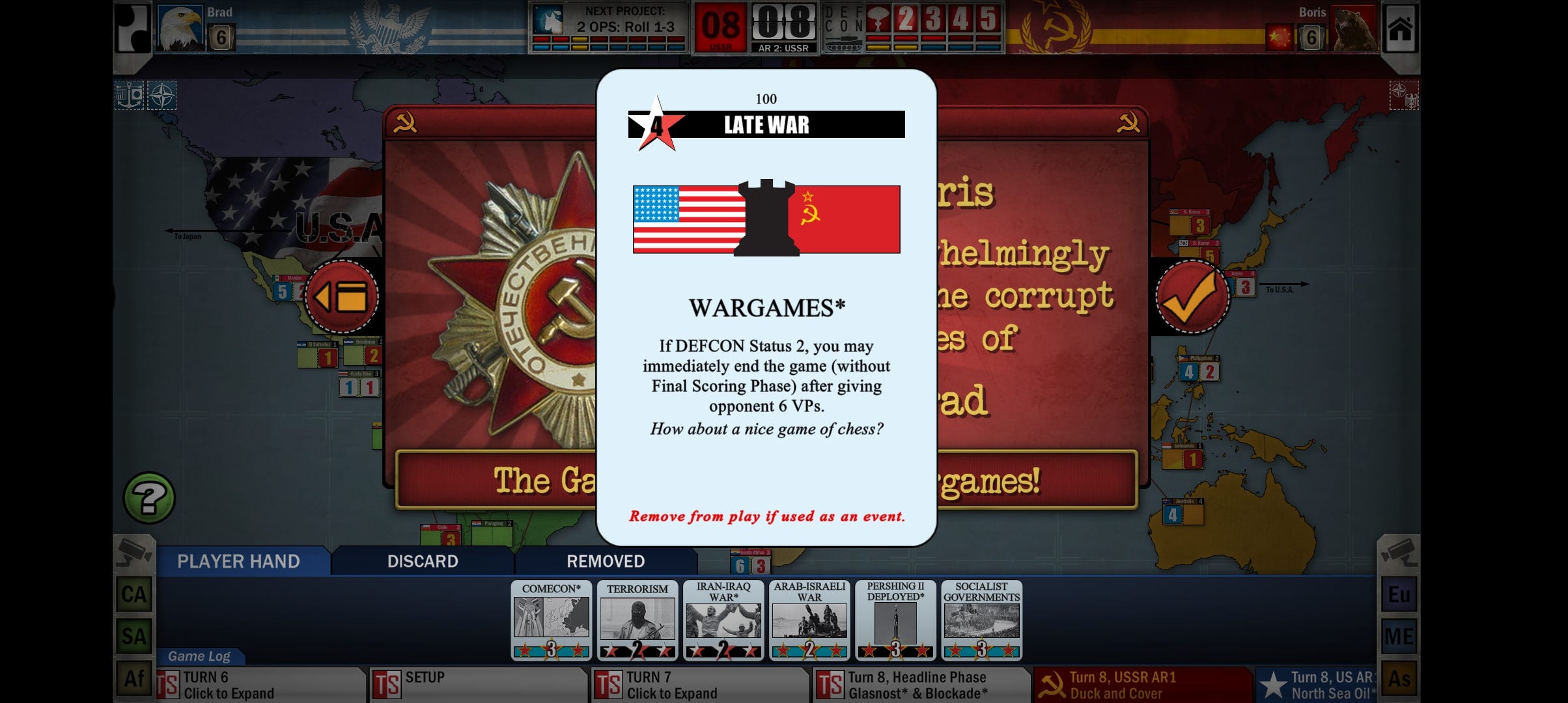
I’m glad I can finally pay homage to it with my own card-driven design. Initially, the event cards in The Shadow Fleet were supposed to be simple, straightforward event cards i.e. randomly drawn at the end of each round and their effects implemented (basically to provide an element of randomness, since I had not yet introduced die rolls).
It was a major turning point for the game (and for me as a designer) when I decided to merge them with the action points (AP) I had allocated for each side and make the game truly card-driven. I still struggled to make the card-driven mechanic work after that but I eventually nailed it.
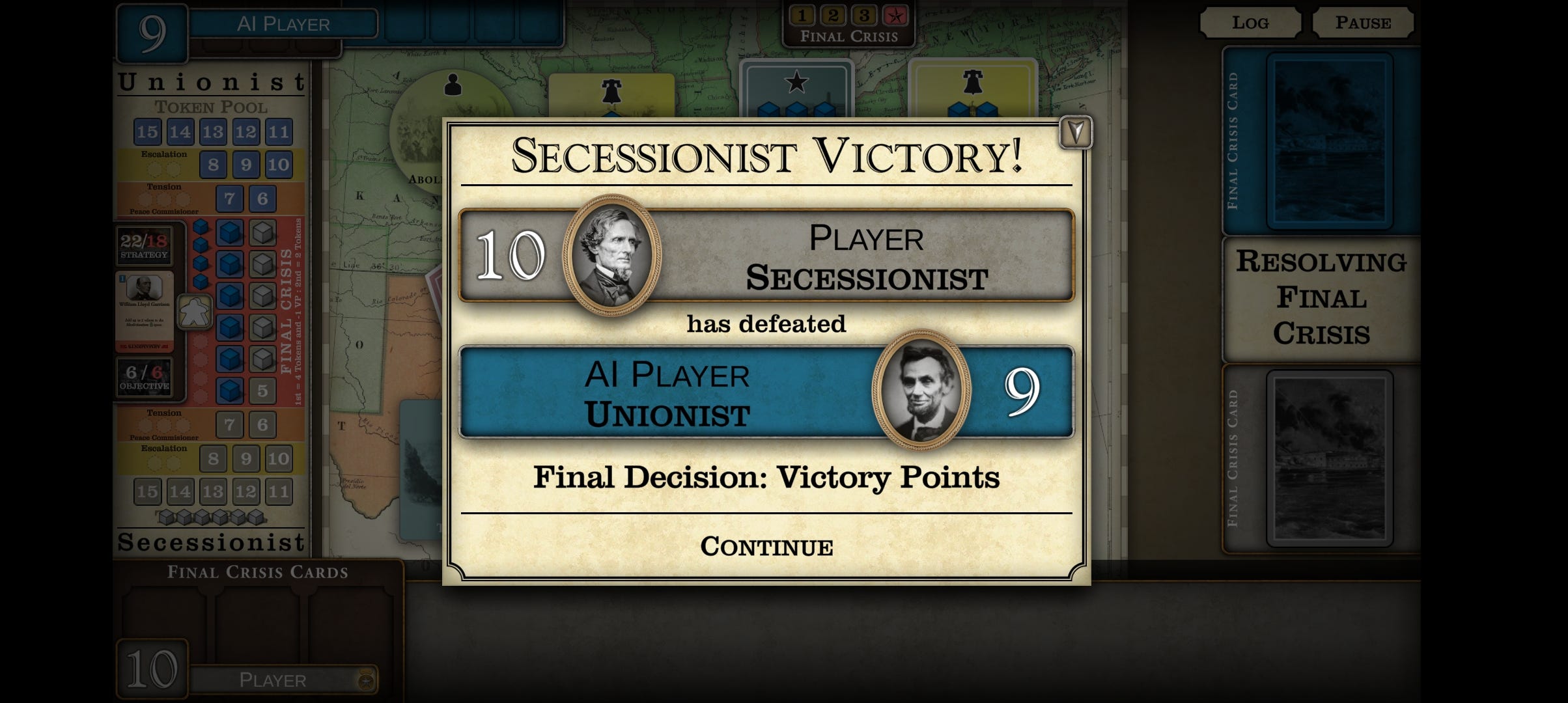
Shoutout to Mark Herman’s Fort Sumter too, I’ve gotten back into playing it again recently (this time experimenting with the Secessionist side). The mobile app version is more or less a micro-wargame since you can get through it in about 20 minutes.
Why am I proud of The Shadow Fleet?
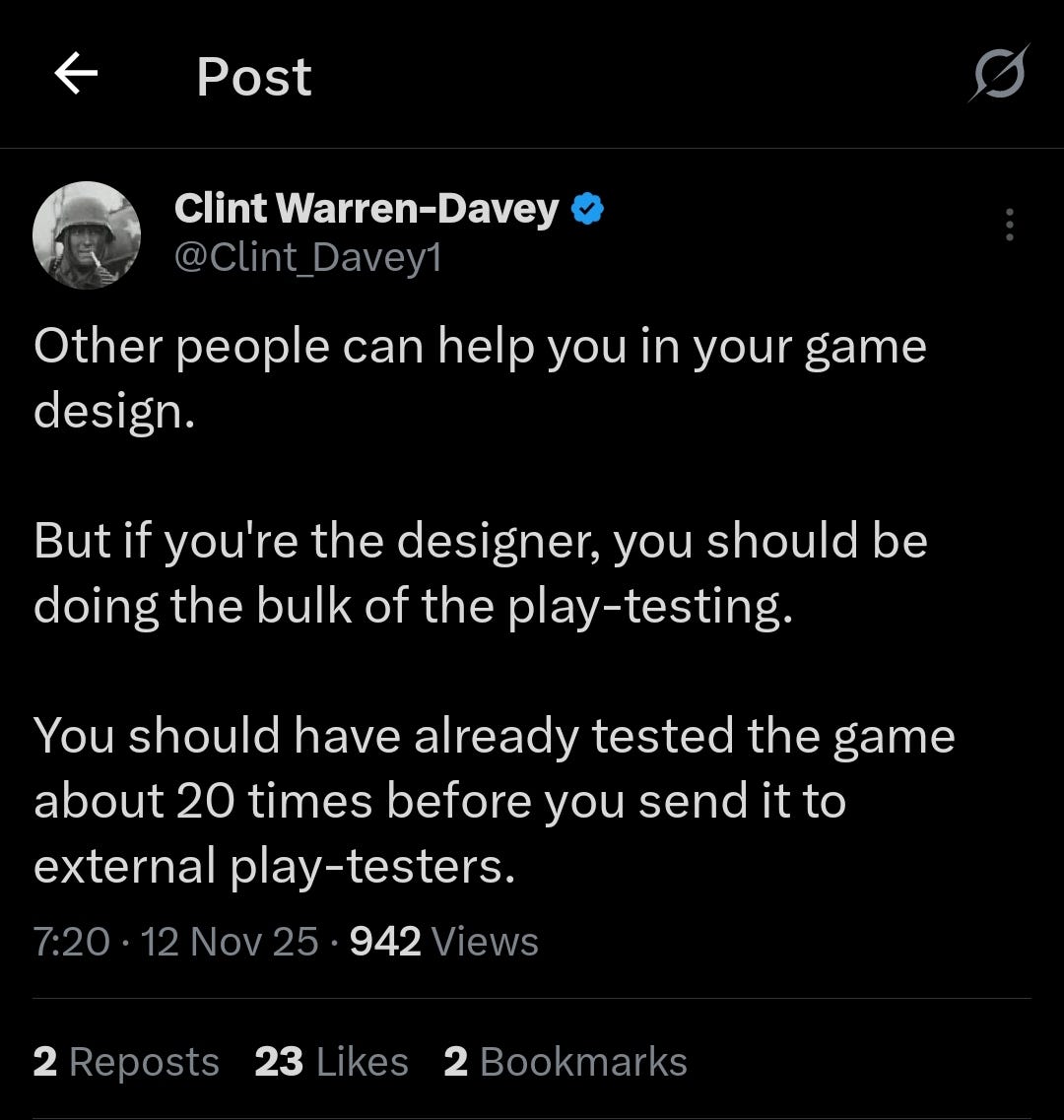
1. I play-tested it even more than the 20 times that Clint Warren-Davey prescribes!
· 1st batch of 5 play-tests was brutal: I couldn’t move a single tanker. I immediately regretted having bothered to print the game out in the first place and having used AI to generate this draft.
· 2nd batch of 5 play-tests was still brutal: I could now move a tanker but there was no tension due to a lack of dilemmas. The card-driven mechanic wasn’t working, especially with the AI-generated effects often falling flat on the board.
· 3rd batch of 5 play-tests went better: After a huge wave of ruthless simplification, introducing die rolls and coming up with my own set of symmetrical event card effects, everything clicked: the game finally had dilemmas!
· 4th batch of 5 play-tests went even better: I fine-tuned the willpower (WP) tracks as the game’s center of gravity, particularly where each side starts and how each side can use WP to execute one of their actions (moving two nodes at once for Russia and seizing a tanker for the West)
· 5th batch of 5 play-tests was amazing: I fine-tuned the nodes and (re)introduced the West’s patrol token to make it a bit harder for Russia to fully meet its delivery order objectives (and enable some executed deception in the game)
· 6th batch of 5 play-tests was amazing: At this point, I was thoroughly enjoying my game!
2. A little less imposter syndrome
Now that I have delivered a point-to-point card-driven micro-wargame design, I feel I can wear the title of “wargame designer” more confidently than ever.
I can still remember the light bulb turning on in my brain when I realized that I needed to design the event cards such that the total cost of the actions enabled by each card was exactly 1 AP more than the AP generated by that card so that players would try to find the perfect timing to play the event or else have to settle for using it for AP.
3. I finally took a break from remixing other people’s games
Much as I’m very proud of them, my last two micro-wargames Call Sign: Modern Land Warfare and The Shadow Lines: Russia are expansions of other people’s work (Sebastian Bae and Viltė Radzytė respectively).
It’s great to know that I can still build my own design from scratch (albeit still borrowing mechanics from elsewhere) especially given that The Shadow Fleet represents a huge growth in my design ability since my last original micro-wargame, African Election.
4. I nearly gave up on it so many times
Between that second batch of 5 play-tests (where there was no tension and the card-driven mechanic wasn’t working) and the third batch (after a huge wave of ruthless simplification), I nearly gave up on the idea altogether multiple times.
My plan was to find another of the micro-wargames that I have previously played and remix it but I couldn’t get myself to actually do that because of how compelling this particular topic is.
5. It has a maneuver warfare angle
Like I highlighted in my review of Battle for Mosul by Fight Club International, this episode of the US Naval Institute’s Proceedings podcast features USMC Major Aric Ramsey discussing his article Maneuver Warfare Is More Than Rapid Movement where he explains that the essence of maneuver warfare is attacking the enemy’s morale, stating, “Maneuver transcends the other forms of warfare. It centers on defeating the fighting spirit of the opponent through a unique combination of methods designed for the situation at hand.”
I was so proud of myself when I managed to make willpower the centerpiece of the game. Since maneuver warfare is about attacking and destroying your adversary’s will to fight, this means The Shadow Fleet also counts as a maneuver warfare wargame!
6. It’s an example of deception in wargaming
With Russia’s allocation of tankers to its two origin ports able to influence the West’s placement of its crucial patrol token in one of the two Monitored nodes, The Shadow Fleet enables executed deception (as opposed to modelled deception) as described by Rex Brynen, in particular M-type deception (as opposed to A-type deception) as described by Donald Daniel and Katherine Herbig.
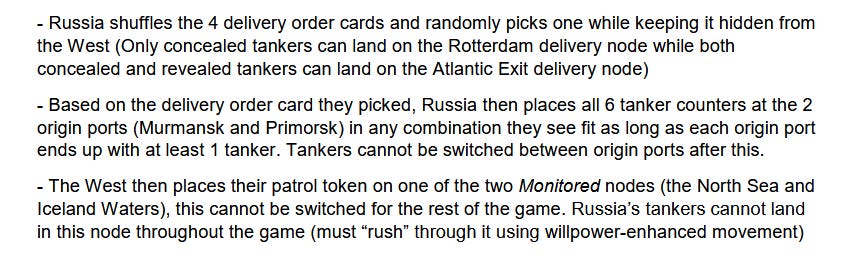
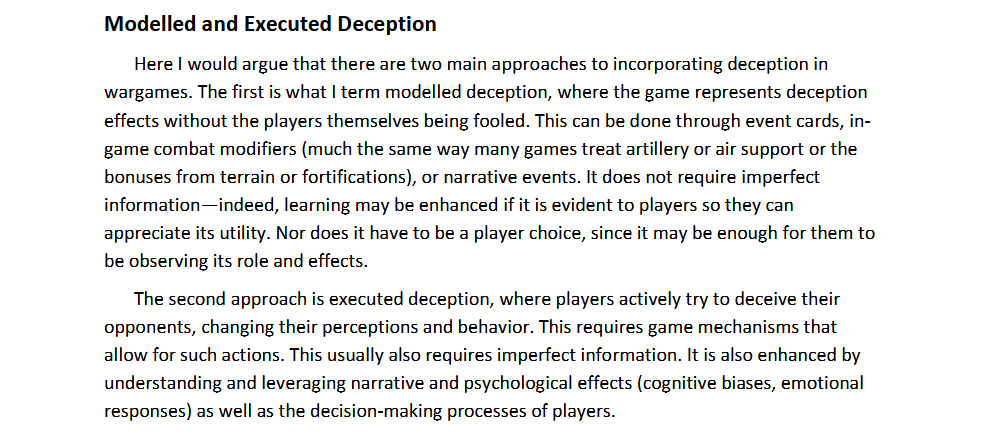
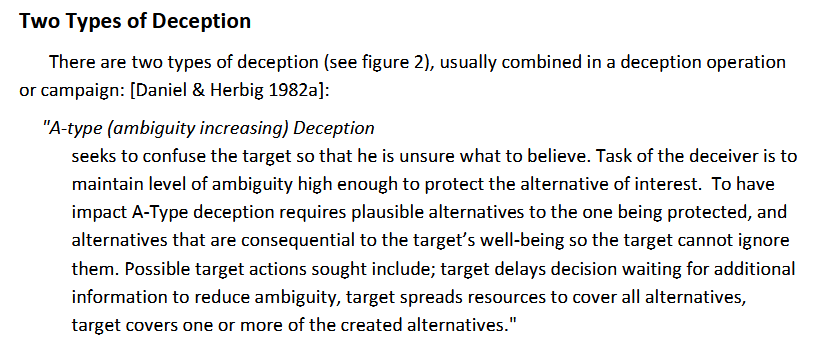

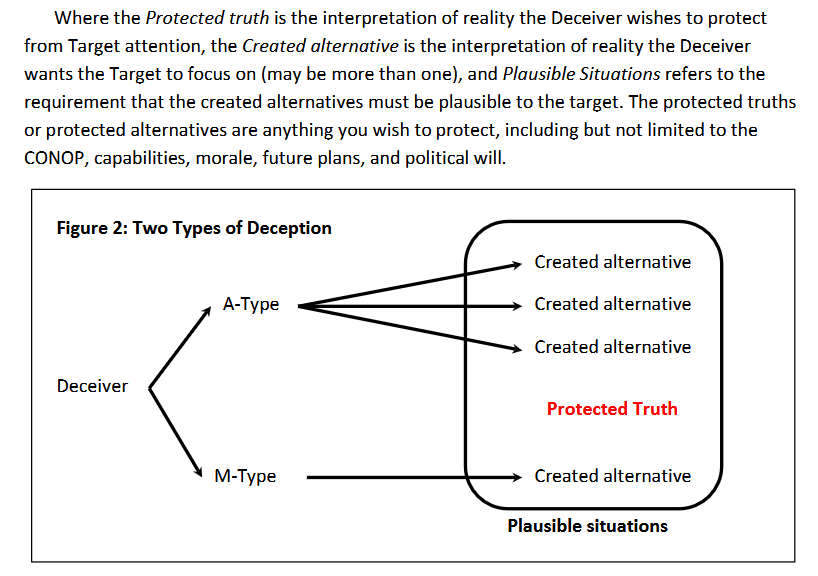
Also, shameless plug to my previous post about Stephen Downes-Martin’s Wargaming Deception Working Group Report (from which I sourced the above screenshots).

PS: I’ve recently started reading John Curry’s book Applying Deception in Wargaming and I can’t wait to see how it will influence my future micro-wargame designs.
7. The symmetry
It was so cognitively delicious for me to make these symmetrical design decisions:
· 33 event cards per side (each set with 15 cards of 3 AP, 12 cards of 2 AP and 6 cards of 2 AP)
· 4 actions per side, all perfect thematic mirrors of each other
· 4 moves per route (Arctic and Baltic) to get from each origin port to its nearest delivery node
How did I arrive at 33 event cards per side?
Well, I knew that I wanted each side to start with 5 cards in Round 1, play 3 cards per round (one per turn, 3 turns per round) and hence draw 3 cards at the beginning of each round starting in Round 2 to replenish their hand back to 5 cards. This would mean that without needing to reshuffle, each player would need to draw 32 cards i.e. 5 + (3*9) over the course of the game.
I decided to make it 33 per side ‘cause I love the number 33! For the love of symmetry, I initially set out to design each set with 11 cards of 3 AP, 11 cards of 2 AP and 11 cards of 2 AP but in the process of mapping out the effects, I settled on 15 cards of 3 AP, 12 cards of 2 AP and 6 cards of 2 AP.
8. The asymmetry
However, it was also satisfying to make these asymmetrical design decisions to make the game more realistic:
· Russia’s willpower starts at 4 while the West’s starts at 3
· Russia’s tankers are immune from being seized in 3 nodes (the origin ports Murmansk and Primorsk plus the exclave of Kaliningrad)
· Russia needs a 2-6 die roll to move a tanker while the West needs a 5-6 die roll (after spending 1 willpower) to seize a tanker
All the above mean it’s easier for Russia to achieve full victory (deliver 3 tankers) than it is for the West to achieve full victory (prevent Russia from delivering any tankers).
However, Russia can also only land concealed tankers in the Rotterdam delivery node while it can land both concealed and revealed tankers in the Atlantic Exit delivery node (slight West advantage).
9. I’m from a landlocked country
I find it hilarious that I’ve lived my whole life in Uganda, a landlocked East African country (and the furthest I’ve travelled is to Rwanda, an even more landlocked country), never having stepped on a ship and yet here I am, able to design a micro-wargame about maritime sanctions in European waters thanks to the guidance and inspiration that I have picked from wargamers all over the globe.
Isn’t the internet such a beautiful thing?
Special thanks once again to the Georgetown University Wargaming Society (GUWS), Fight Club International, King’s Wargaming Network, Armchair Dragoons, and all the other various wargaming channels that have guided me on my journey so far.
How have I used AI to design The Shadow Lines: Russia?
1. Claude was my brainstorming assistant. You can see our whole chat here. Once again, I swear I’ll try not to accidentally delete it like I did for the one where we brainstormed for African Election.
However, I have to highlight that by the end, it was barely usable thanks to Anthropic’s recently increased usage limits for free accounts. You can barely get one prompt in these days without being told to come back later!
2. Claude helped me write thematic copy for the event cards based on the effects I had come up with for the 66 event cards.
3. Claude also helped me come up with well-detailed prompts to generate multiple versions of the map board using Gemini/Nano Banana.
4. Gemini/Nano Banana helped me generate multiple versions of the map board as needed.
5. Gemini/Nano Banana also helped me generate a cover for the game.
What wargame design lessons have I solidified from The Shadow Fleet?
As usual, most of these are not new, but I feel the need to crystallize them here in case I ever forget them.
1. Play-test, play-test, play-test!
I was already a full card-carrying convert to the Clint Warren-Davey church of play-testing your game at least 20 times before giving it to anyone else but after going above and beyond to 30 times, I’m now the choir conductor!
2. Play more games!
Once again, this is the most cliché eyeroll-worthy advice that experienced wargame designers always share but it’s actually true… you need to play more games to get good at designing games! I wouldn’t have been able to design The Shadow Fleet if I hadn’t repeatedly played The Shadow Lines, Supply & Steel, Twilight Struggle and Fort Sumter.
3. AI is your friend!
From my experience so far, the hardest part of designing a wargame is starting. I strongly believe that that gap between the idea swirling around in your mind and getting it on paper is where most wargames die. So, need a quick rough design draft to get going? AI is perfect for this!
4. AI is not your friend!
Yes, I know what I just said. However, you must be very careful with that AI-generated rough design draft. It will over-optimize for realism but you’ll just end up with several open game loops that lead to nowhere and game components that don’t really do anything.
5. Ruthless simplification
This is exactly what you need to scoop a gem out of the (mostly) rubbish that is your AI-generated rough design draft. No, you don’t need that many tracks. No, you don’t need that many counters. And no, you don’t need that many phases per round. DUMB IT DOWN!
6. Don’t give up!
Yes, you will get so frustrated that you will contemplate abandoning the project altogether. But listen, you are most likely one ruthless simplification away from nailing that design idea in your head. Take a walk, take a nap and come back with fresh eyes, you will see exactly what needs to be cut.
OPEN TO WORK: Do you need help with content marketing or game co-designing for your wargaming services/products? I’m currently open to gig work in defense, academic, civic or business wargaming as a part-time remote freelancer (10 – 30 hours per week). Please DM me on LinkedIn via the Wargaming Weekly page or my personal profile to book a free consultation call. Like the Gen-Z kids like to say… lemme cook!
Wait! What’s hiding in that Fiction Corner?
A triple serving of useful wargaming fiction! Yes, I was very busy during my Substack suspension…
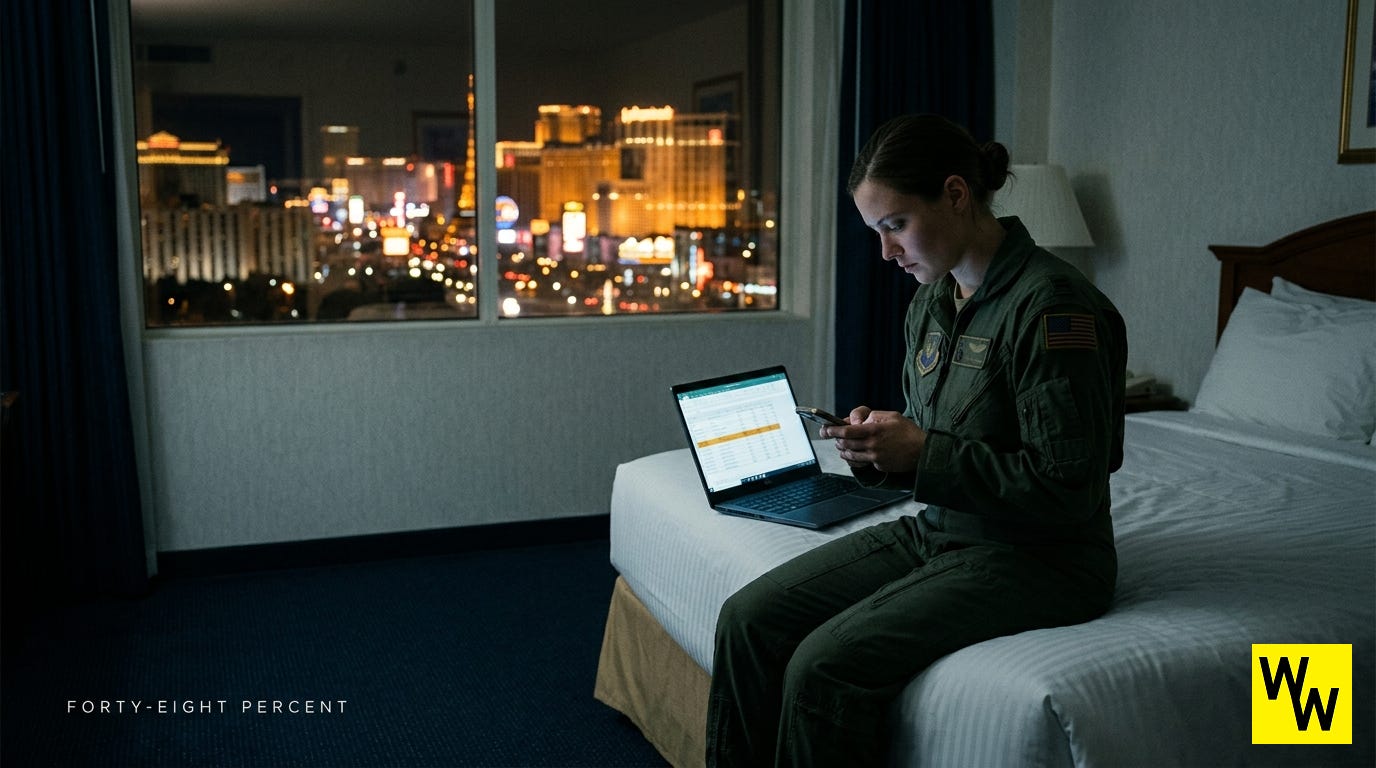
Lieutenant Maya Loh has spent three weeks carrying a number she cannot put down: 48. It is the percentage of the time that trained Air Force officers — people like her, people she trusts with her life — produced viable battle plans. The machine hit 97. Tomorrow morning the after-action brief goes public, and the people she flies with will read it for the first time. Tonight she has one question she cannot answer: how do you tell someone that the thing they are best at, they are only half-right about?
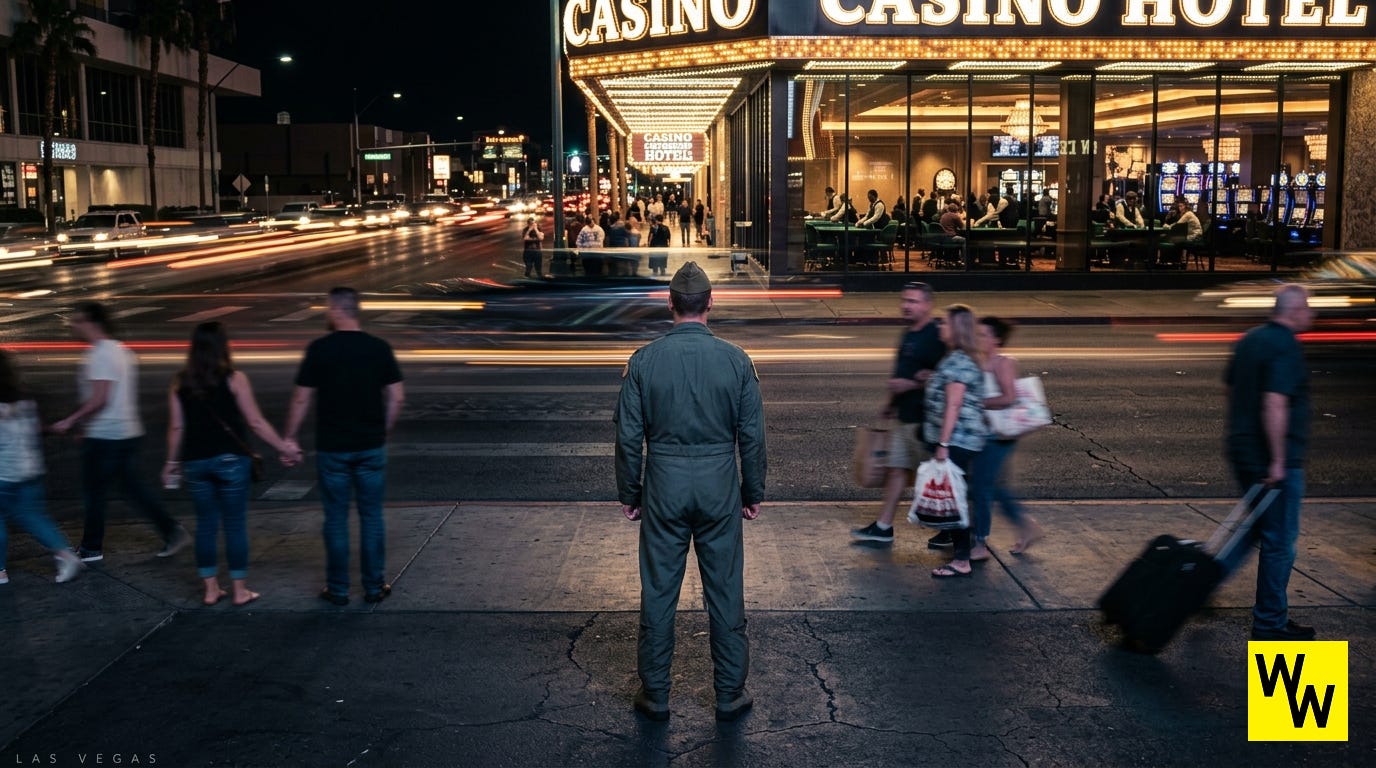
Captain Ric Salazar steps outside the Shadow Operations Center-Nellis for air and finds himself on a Las Vegas sidewalk in his flight suit, tourists streaming past, a casino’s probability engines humming fifty feet away. He has just watched a machine generate a kill chain — ISR, refuelling, cyber, air defense suppression — in 41 seconds. He has a thought he cannot un-think, and nowhere classified to put it. The email he drafts to his program manager that night will go through eleven versions. Only one of them tells the truth.
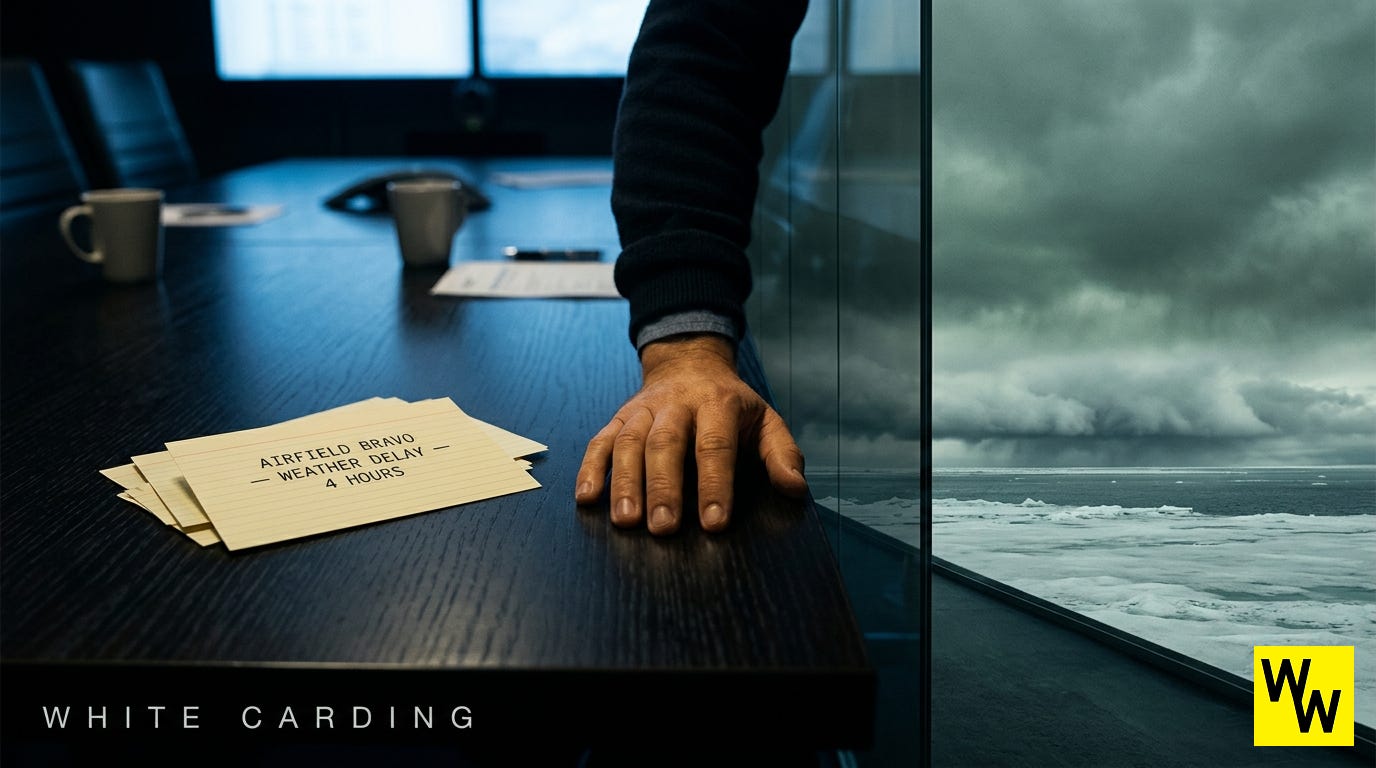
Captain Annika Solberg has spent four years flying weather reconnaissance over the Barents Sea, and she knows exactly what is wrong with the index card a young operator just read aloud in a Las Vegas conference room. The AI absorbed the white-carded weather event — a four-hour airfield closure — and generated a course of action so elegant that the room applauded. What the room doesn’t know, what Annika has known in her body since her third winter over the ice shelf, is that the weather event they just fed the machine doesn’t exist in nature.
Lastly… what’s that over there in the Business Corner?
Nesrine Changuel (author of Product Delight) hosted by Rob Alvarez on the Professor Game podcast.
This caught my eye because the number 2 metric that I’m aiming for with my latest fintech app, Social Funds, is joy (with number 1 being beauty). So only second to feeling like it’s the most beautiful app on their phone, I want everyone who uses Social Funds to smile (or even better, giggle) at it as often as possible.
Yours in hex,
Rwizi.
ABOUT THE AUTHOR:
Rwizi Rweizooba Ainomugisha is a freelance wargame researcher, analyst and designer. With a background of over 10 years in the B2B marketing and fintech startup spaces, Rwizi is also building Social Funds, the gamified social finance app designed to help young Ugandans budget, save, and fund their goals together.

Two more key clarifications:
1. All 6 Russian tankers start out revealed (without concealment counters on them)
2. The West can only seize a revealed tanker (without a concealment counter)