Wargaming Weekly #058: Why has this Economics & Politics major designed a wargame for her Bachelor’s thesis?
My interview with Viltė Radzytė, wargame designer and Economics & Politics major at ISM University of Management and Economics in Lithuania

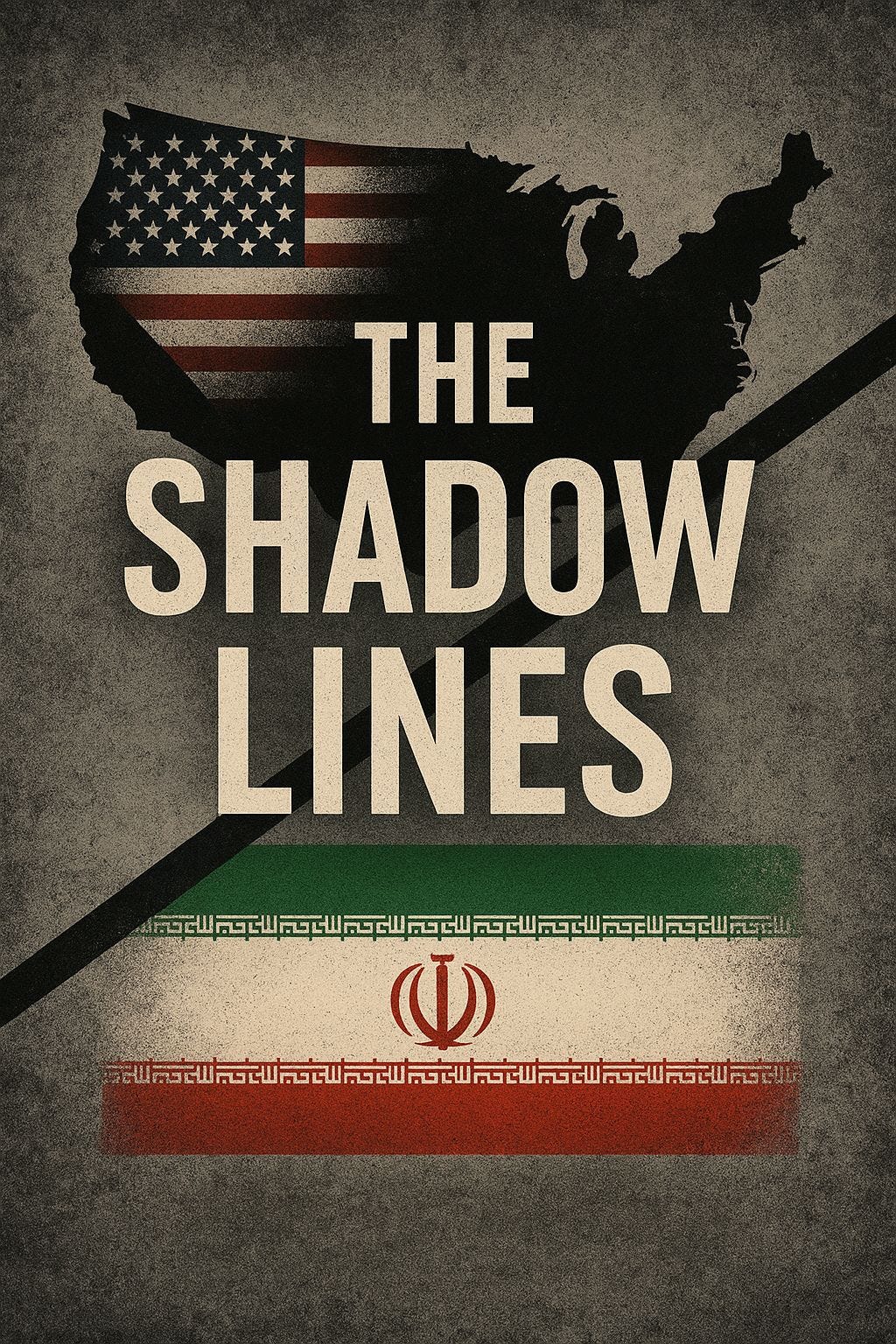
Last month, I reviewed The Shadow Lines, a two-player wargame about US-Iran economic warfare designed by Viltė Radzytė for her Bachelor’s thesis. She’s an Economics and Politics major at ISM University of Management and Economics in Lithuania.
Like I mentioned in my review, I was drawn to the game by the fact that it’s an economic wargame (with economic warfare being one of the least gamed forms of warfare) and that it’s a prime example of the integration of wargaming in education that I’d love to see more of.
Furthermore, upon playing The Shadow Lines it reminded me a lot of my own, African Election wargame and even inspired me to introduce dice in the latest version!
Long story short, I reached out to Viltė for an interview to learn more about how she ended up designing an economic wargame for her Bachelor’s thesis.
SPONSOR THIS NEWSLETTER: Is your organization interested in becoming an official Wargaming Weekly sponsor? Please reach out to me today via X, LinkedIn or Bluesky to discuss our potential partnership! You can also support Wargaming Weekly on Patreon for as little as $5 per month! Plus, who knows, you might even enjoy the FREE “Love, Lies & Wargames” short story series that I have published there!

Rwizi: Your origin story feels like a natural place to start. What drove you into wargaming in the first place? What was the light bulb moment for you?
Viltė: From a young age, I was interested in board games and strategic thinking, but I had no prior knowledge of wargaming until my second year of university (Bachelor’s program). During that time, I was introduced to Pijus Krūminas, one of Lithuania’s wargaming professionals. He often attended wargaming conferences, and one day I dared to start a conversation with him about board games. That was the first time I learned about wargaming.
At the time, I did not understand much; it was simply a new term that sounded interesting. At some point, I asked whether anyone had written a bachelor’s thesis on wargaming at our university. Sadly, no one had. Later, I learned that Pijus spoke with my program director, who agreed to let me write my bachelor’s thesis on wargaming if I wished. This came as a surprise, as I had asked purely out of curiosity and had not planned to pursue it seriously.
After considering all factors and seeing Pijus’s passion for the subject, I decided to write my bachelor’s thesis using wargaming.
I am obsessed with planning; in fact, I have had a life plan since seventh grade. Therefore, learning an entirely new subject (wargaming) in just one year was quite challenging for me. Thankfully, Pijus helped immensely by providing essential literature, introducing me to various wargames, bringing me to multiple events, and adding me to the ISM Wargaming Lab. For everything I do and know today, I owe a great deal of gratitude to my professor and supervisor, who took time out of his busy schedule to introduce me to wargaming and guide me throughout this journey.
Rwizi: Why did you choose to design a wargame for your Bachelor’s thesis? Or was it assigned to you? Is this your first attempt at wargame design?
Viltė: As mentioned earlier, choosing wargaming as the concept for my bachelor’s thesis was a partially spontaneous decision that I do not regret.
Is this my first attempt at wargame design? Yes and no.
I began creating Shadow Lines during the spring semester of my third year. At that time, I was taking a course led by Pijus called Simulation Development, in which we were introduced to wargaming and given the opportunity to design a wargame in groups. My team began working on the GDL game, which we presented at several events and are currently working toward publishing.
However, Shadow Lines is my first individually designed game. Thus, while it is not my first experience with wargame design, it is the first game I created independently.
Rwizi: What’s the inspiration behind The Shadow Lines? Why did you choose this topic of economic warfare/US-Iran rivalry in particular?
Viltė: I am an economics and politics student; therefore, both recent and historical events are of great interest to me. First, I had to comply with my university’s requirements by incorporating political and economic variables into my thesis. Second, in 2024–2025, the United States made, in my opinion, several questionable economic decisions, which I wanted to analyze in greater depth. Third, U.S.–Iran relations had not previously been a major area of interest for me. While I was familiar with the general situation, I lacked detailed knowledge.
Therefore, I decided that if I had to spend half a year writing about a topic and another half a year creating a game (while having only basic beginner knowledge of wargaming) I might as well challenge myself by choosing a subject I knew almost nothing about. I saw this as an opportunity to expand my knowledge and push myself as much as possible. I am glad I made that decision, especially since later that summer the U.S. bombed Iran, making the topic even more relevant to current events.
Rwizi: Tell me about the design process behind The Shadow Lines
Viltė: As mentioned earlier, I was part of the wargaming lab, where we played a variety of games. As a result, most of the mechanics in Shadow Lines are combinations of mechanics from other games that I believed would work well in my design.
First, I had to define a clear research question and objective. To do this, I created numerous tables to organize my ideas and select an approach that was feasible within the limited time available.
Next, I conducted extensive research—not only on U.S.–Iran relations, but also on sanctions, economic pressure mechanisms, and similar cases involving other countries. I intentionally avoided researching existing wargames about the U.S. and Iran to prevent unintentional copying. Once you see a design, it becomes difficult not to replicate certain elements. This research phase lasted approximately three to four months (with breaks, as I was also working on other wargames).
After completing the research, I created detailed tables outlining game dynamics, possible actions, and mechanics.
I then integrated all components, tested the game multiple times, and made adjustments. Pijus provided extensive support during playtesting, as did my non-wargamer friends, whose feedback was especially valuable in determining whether the game was understandable to those unfamiliar with wargaming. Additionally, I had the opportunity to playtest the game in Germany during a wargaming camp with several professional wargamers.
Finally, I focused on making the game visually appealing.
Rwizi: What was the hardest part about designing The Shadow Lines? If you had to start designing it all over again, what would you do differently?
Viltė: The hardest thing was letting go of ideas I really liked just because I did not have time for them, and because I had to make this game as simple as I could for my non-wargamer professors or whoever would read my bachelor’s thesis to understand.
Actually, my initial idea was to make this a “full-on” tabletop for 5-6 players… maybe I will do it in the future after I’m finished with my other wargames, who knows. Thus, I guess the most challenging part was turning this big game idea into a smaller game while keeping the core the same.
And of course, trying to keep up with my bachelor’s thesis requirements. As I mentioned, my work was the first of its kind, so I had to keep the initial requirements, which made the process a little more complicated.
If I had to start it again with the knowledge I have now, I would change the mechanics (e.g., remove dice or limit it to a few cases). Include opposing forces, etc. I don’t know if I could actually do that, as my bachelor’s thesis requirements limit my ability to do so.
Rwizi: Can you please tell me a bit more about why you would want to use dice less (or not at all) if you had to start over? (This is very interesting to me because your use of dice in The Shadow Lines actually inspired me to update my own game with a die roll for actions)
Viltė: As I mentioned, I wanted to create a bigger game with more mechanics and players, but as I didn’t have much time I had to simplify everything; thus, at that time, dice were the best way out.
Basically, dice are used for uncertainty, and in my game, everything is based on dice. Even though players might think they have some kind of control over outcomes (because they choose an action), in reality, they have limited control because everything is based on dice. Of course, in some cases, they are able to increase or decrease probabilities, but not all the time. Also, I think there are better mechanics that could be applied to the game.
All in all, in this version, dice work perfectly, but if I want to make this game take into account more domains and include additional players, dice wouldn’t work as it would be too complicated to calculate all probabilities and possible adjustments.
Rwizi: What has designing The Shadow Lines revealed to you about US-Iran economic warfare that you didn’t know before you started?
Viltė: The game gave me a clearer view of why Iran is an outlier in implementing sanctions. It is a hard nut to crack, and without proper leadership and decision-making, the U.S. will struggle to achieve its goal.
Also, decision-makers’ personal views, especially on the U.S. side, play a significant role, because if people had used logic and strategy rather than letting their feelings lead, this economic warfare might have ended long ago.
Additionally, I learned the detailed history of U.S.-Iran international relations, including the involvement of other organizations and countries and their hidden intentions.
Rwizi: Share with me some tips about infusing wargaming into education that you have gained from this experience. What advice do you have for faculty who would like to make their students design wargames as part of their courses? What advice do you have for students who want to design a wargame for their Bachelor’s theses like you?
Viltė: For faculty: encourage students and give all support that you can. This subject is relatively new in the civilian education system; thus, students won’t feel comfortable delving into something they don’t know about.
Also, start with simple game sessions; this way, students can grasp a bit of what is going on and might get interested. Please update them with everything that is going on, events, conferences, etc., and bring them along if possible.
For students: do not be afraid, especially if you have someone to guide you on this journey. Do not be scared to reach out to other wargamers internationally. To your surprise, they are charming people who can give a bunch of tips, especially if you are a newbie.
Also, you need to put a lot of time into it and be patient. Understand that it’s going to be hard, especially if it’s your first project. If you think sitting to read books and articles isn’t for you - don’t even start. Be ready to give up half of your initial ideas. They might be good, but not for this particular project, and it’s ok. Lastly, do not forget to have fun, go to various events, network, and gain new experiences.
Rwizi: What has the reception of The Shadow Lines been like so far? What next? (Both for the game and for you as a designer)
Viltė: The Shadow Lines received a lot of positive comments, which I’m happy about. Even non-gamers enjoy this game and want to play it again and again. This project encouraged other students to write their bachelor’s theses on wargaming, and it makes me very proud. Even though I still do not have my thesis outcome, I’m already happy with the results.
What’s next for the game? I’m already working with a few wargamers to make the game computerized and accessible to an international audience. If I have time, I would like to come back to my initial idea and make it a larger 5-6-player wargame.
And what’s next for me? As mentioned earlier, I hope to publish the GDL wargame with my team. I am also working on a new wargame focused on ambiguous information. Finally, I aim to pursue a Master’s degree in wargaming or a related field, and I am currently spending most of my time researching programs that would help me become a professional wargame designer.
[INTERVIEW ENDS HERE]
Once again, you can check out my full review of The Shadow Lines here:
You can also check out how I lost at my debut Kriegsspiel where Viltė was one of my two teammates alongside Ozlem Deniz Kahraman (MA in International Relations graduate from the University of Exeter and a member of Fight Club Türkiye).
OPEN TO WORK: Do you need help with content marketing or game co-designing for your wargaming services/products? I’m currently open to gig work in defense, academic, civic or business wargaming as a part-time remote freelancer (10 – 30 hours per week). Please DM me on LinkedIn via the Wargaming Weekly page or my personal profile to book a free consultation call. Like the Gen-Z kids like to say… lemme cook!
Lastly… what’s that over there in the Business Corner?
Yet another great founders’ guide to applying for startup investment from the good people at a16z speedrun.

It’s the follow-up to the previous one (which I shared in the Business Corner segment of Wargaming Weekly #054: What has losing at my first ever Kriegsspiel taught me about startup failure?)
This is my favorite part in this latest one…
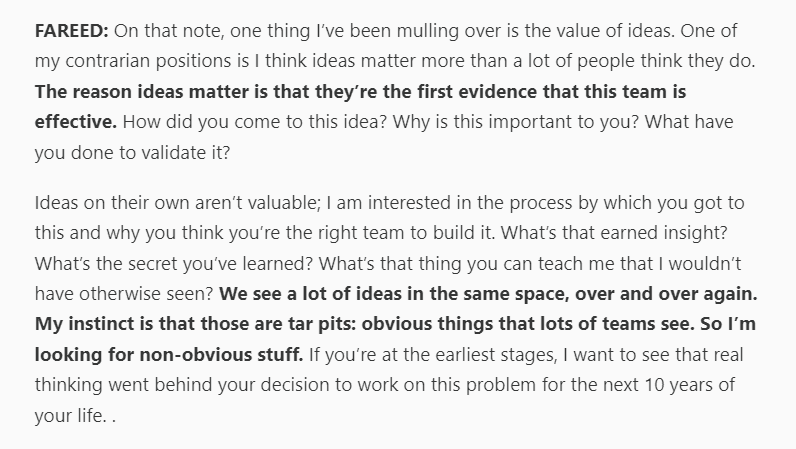
You really can’t half-ass a startup, you have to be ready to give it at least 10 years of your life.
Yours in hex,
Rwizi.
ABOUT THE AUTHOR:
Rwizi Rweizooba Ainomugisha is a freelance wargame researcher, analyst and designer. With a background of over 10 years in B2B marketing, Rwizi is also a Co-Founder, Co-CEO and Chief Strategy Officer (CSO) at Lupiiya Books, the gamified crowdfunding app designed to help young African entrepreneurs turn their family, friends and social media followers into proper business investors.