
Wargaming Weekly #072: Are you looking for a wargame about security force assistance (SFA)?
Introducing “Assisting Security” – a solitaire micro-wargame inspired by the RAND Corporation’s multiplayer SFA strategy game sponsored by U.S. Africa Command (AFRICOM)

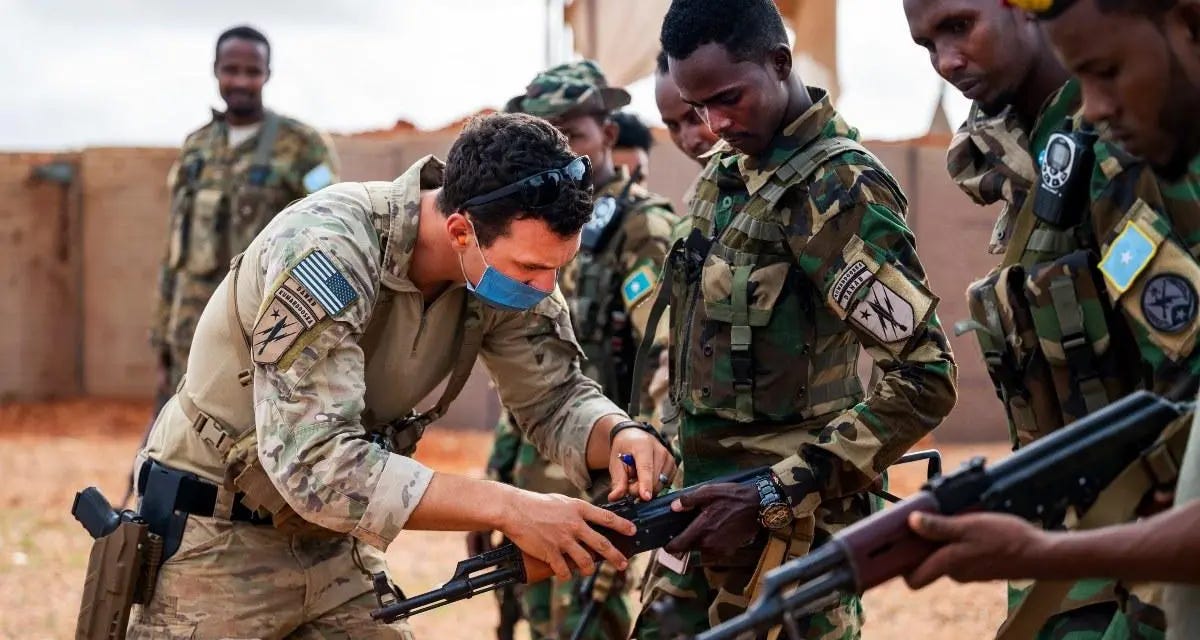
There’s nothing new under the wargaming sun!
Late last year, I wrote an article where I brainstormed which commercial-off-the-shelf (COTS) wargames could be specifically useful for Security Force Assistance Brigades (SFABs).
Wargaming Weekly #039: Does wargaming have a place in the Security Force Assistance Brigades (SFABs)?

We have seen growing wargaming advocacy for the US Army, for the US Navy, for the US Marine Corps, for the US Space Force, for the US space industry, and even for the US Coast Guard… it got me thinking, what about wargaming for the Security Force Assistance Brigades (SFABs) in particular?
Recently, while revisiting that article, I thought to myself, “I wonder if anyone has made a wargame about security force assistance.”
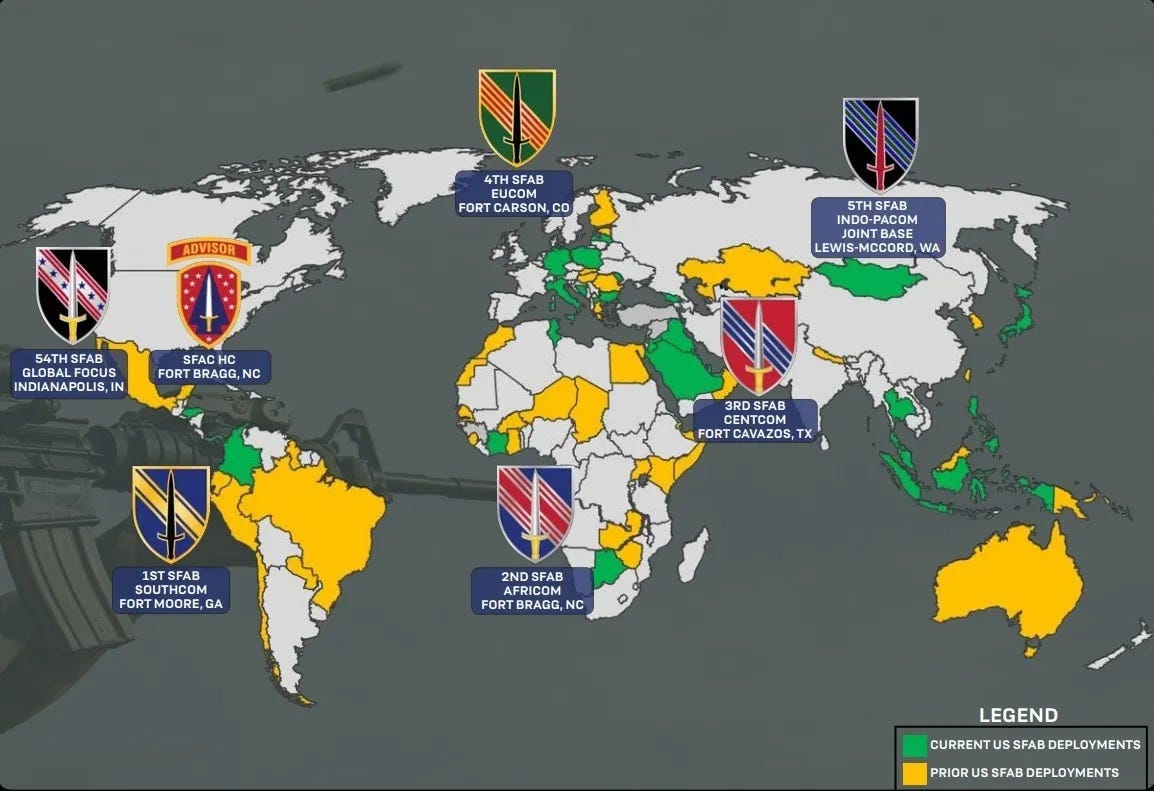
A few seconds after typing “wargaming security force assistance” into my search engine, I came across this RAND report about a multiplayer SFA strategy game sponsored by U.S. Africa Command (AFRICOM).
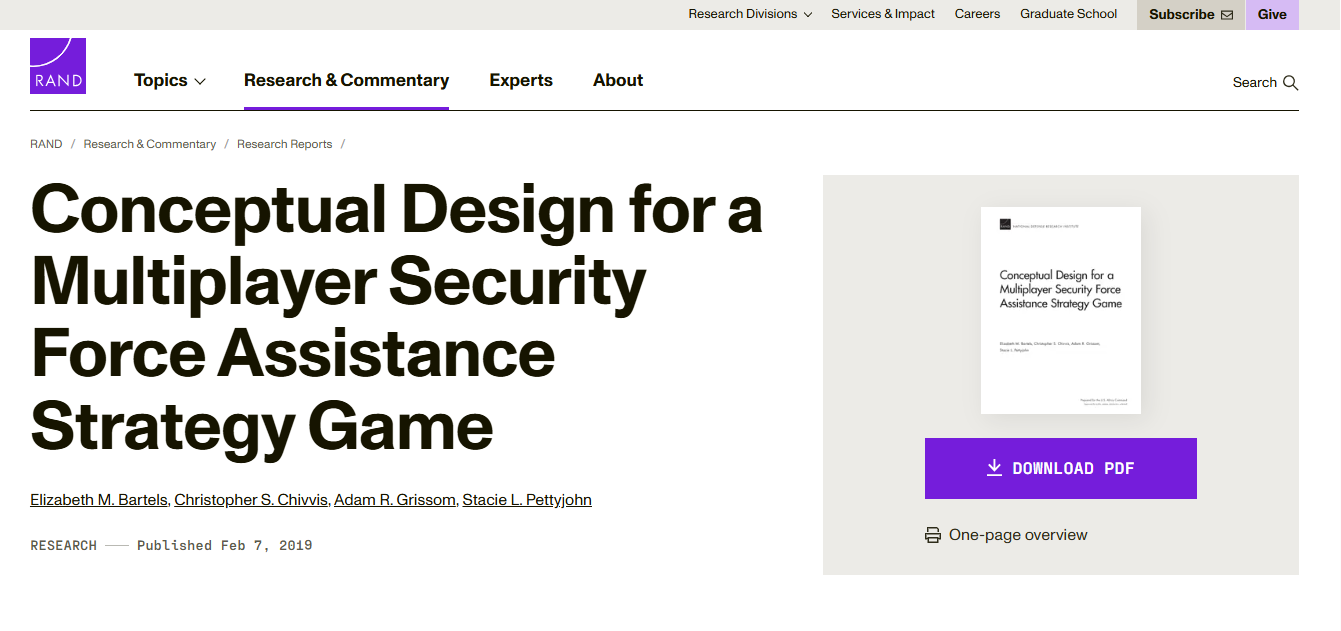
I immediately knew I had to remix this game!
On that note, I present… Assisting Security: a solitaire micro-wargame about security force assistance.
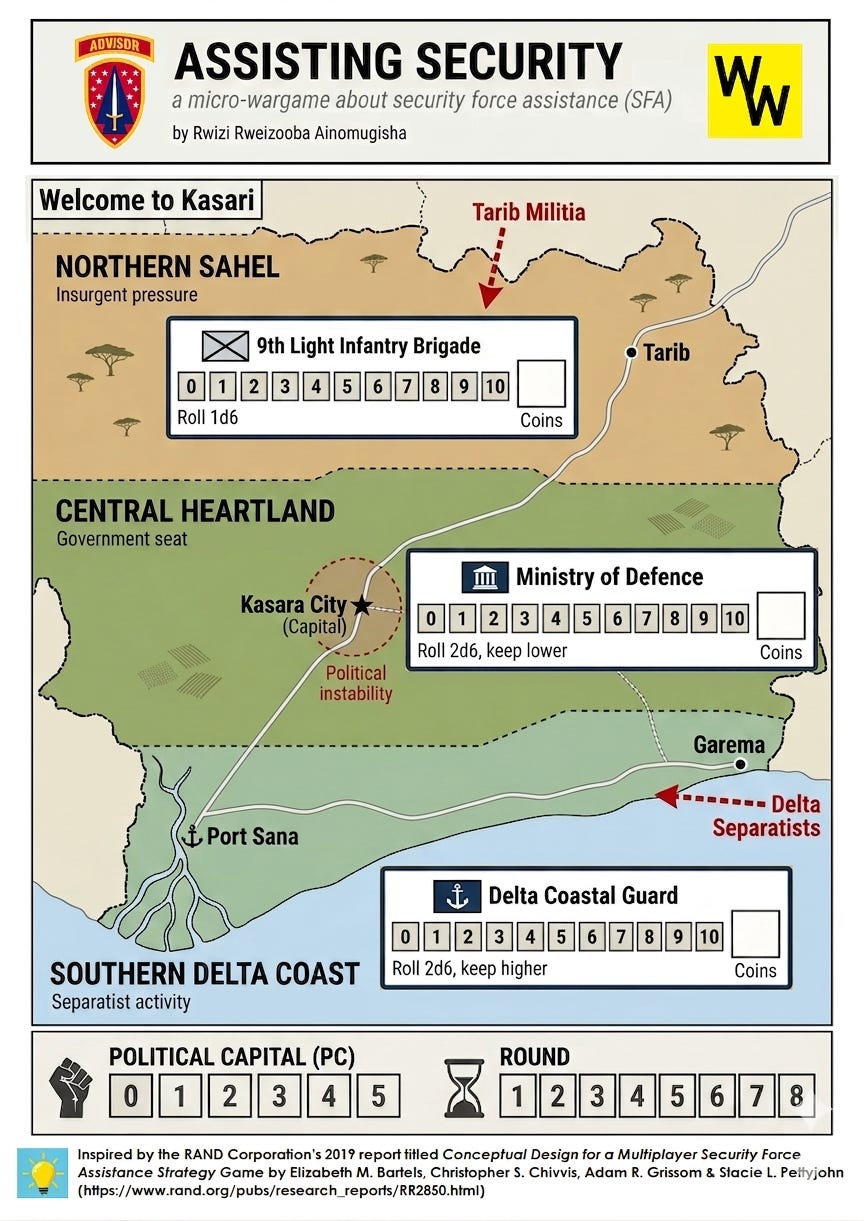
Download and print the full game PDF here to play Assisting Security. Let me know what you think in the comments below!
SPONSOR THIS NEWSLETTER: Is your organization interested in becoming an official Wargaming Weekly sponsor? Please reach out to me today via X, LinkedIn or Bluesky to discuss our potential partnership! You can also support Wargaming Weekly on Patreon for as little as $5 per month!

SPECIAL SALUTE to my first top-tier patron: Christopher Nordahl
Why am I proud of Assisting Security?
1. I play-tested it 20 times as prescribed by Clint Warren-Davey
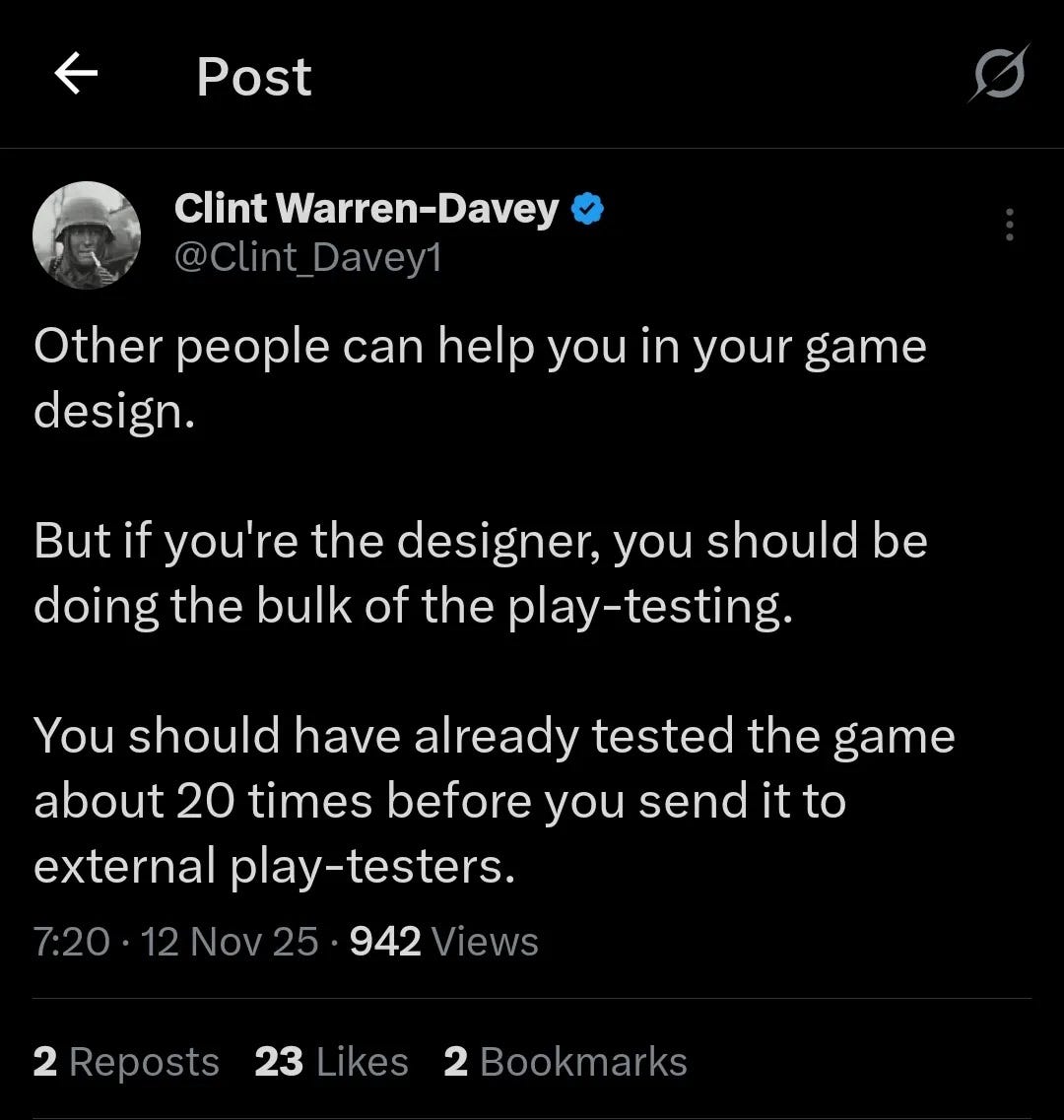
This was particularly important especially given that I didn’t playtest my last micro-wargame Close Access (inspired by Cutis Miller’s Ambush from the Depths) since I felt that I hadn’t made enough changes to the original game mechanics to necessitate it… and I was feeling too lazy, to be honest.
· 1st batch of 5 play-tests was brutal: The game was such a drag. I had to abandon the two-player mode and do away with the six investment types (equipment, training, ISR, reform, logistics, and advisors).
· 2nd batch of 5 play-tests wend a bit better: The game was flowing better and the randomness of picking the Partner Action cards from a shuffled deck was generating some interesting dilemmas.
· 3rd batch of 5 play-tests went much better: I fine-tuned the Advisor Agenda cards as well as the other two victory conditions to make sure the game wasn’t too easy to win and yet also not always a loss.
· 4th batch of 5 play-tests went even better: I renamed the Will Power (WP) track (that I had transplanted from The Shadow Fleet) to Political Capital (PC) and fine-tuned the actions for earning and spending PC.
2. I arrived at ruthless simplification much faster
Compared to my previous micro-wargame design cycles, I managed to emotionally disengage from the first draft much faster and not fall for the extremely seductive appeal of over-indexing on realism.
Now, I fear that I might have over-corrected and sacrificed too much realism for playability with the “Spend 3 coins off-unit to earn +1 PC” game mechanic but I’ll leave that to you to determine.
3. My previous micro-wargame The Shadow Fleet came in handy
Nothing beats earning compound interest from my previous micro-wargame design investments! I was able to use the earlier drafts of The Shadow Fleet and the final version that I eventually published to show Claude that the first draft of Assisting Security was still too complex, and that we needed to figure out how to “dumb it down” to something much your playable rather than focusing too much on realism.
4. It’s inspired by a RAND Corporation report
Like I highlighted in my appearance on Lux Capital’s Riskgaming podcast hosted by Danny Crichton, my journey in wargaming started with a Google search about “gamification in government” that led me to discover the RAND Corporation’s Cold War wargaming. I’m so proud that my journey has come full-circle to remixing a RAND wargame!
5. Security Force Assistance (SFA) hits very close to home
My country, Uganda, is a previous recipient of American security force assistance and continues to be one of the most reliable security stability partners for the US across this volatile East African region. So I’m glad that my micro-wargame design journey has brought me to this uniquely relevant topic.
How have I used AI to design Assisting Security?
1. Claude was my brainstorming assistant. You can see our whole chat here. However, just like with The Shadow Lines: Russia by the end, it was barely usable thanks to Anthropic’s recently increased usage limits for free accounts. I honestly don’t know if it will be usable once Mythos drops!
2. Claude helped me write thematic copy for the both the Advisor Agenda and Partner Action cards.
3. Claude also helped me come up with well-detailed prompts to generate the map board and images for the cards using Gemini/Nano Banana.
4. Gemini/Nano Banana helped me generate the map board and images for cards as needed.
What wargame design lessons have I solidified from Assisting Security?
As usual, most of these are not new, but I feel the need to crystallize them here in case I ever forget them.
1. Play-test, play-test, play-test!
As mentioned earlier, I didn’t playtest my last micro-wargame Close Access so I’m glad that this time, I didn’t cut corners and once again became a full card-carrying convert to the Clint Warren-Davey church of play-testing your game at least 20 times before giving it to anyone else.
The truth is that play-testing is where the real designing happens, there are small kinks in the game flow and special sparks of design inspiration that you simply can’t catch unless you actually commit to getting down and dirty in the play-testing trenches.
2. Play more games!
As usual, this is the most cliché eyeroll-worthy advice that experienced wargame designers always share but it’s actually true… you need to play more games to get good at designing games!
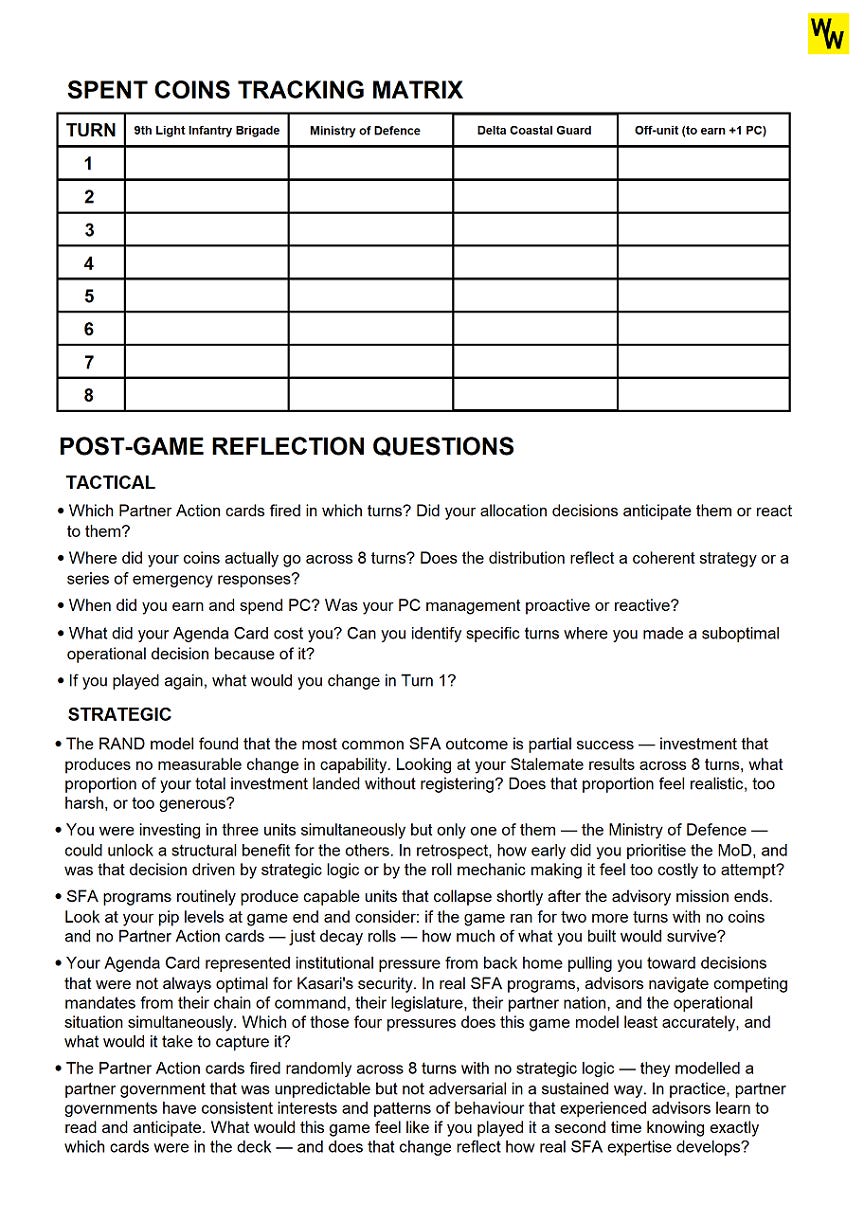
I wouldn’t have been able to design Assisting Security if I hadn’t repeatedly played my own The Shadow Fleet and The Shadow Lines by Viltė Radzytė. I have also borrowed the idea of including a set of post-game reflection questions that I picked up from playing Readiness by Fight Club International.
3. AI is your friend!
As usual, Claude was so useful in getting me to that extremely important first design draft to get going, especially since I had an authoritative RAND report for it to build from.
And Gemini/Nano Banana gave me great visuals in seconds for free that would otherwise require me to set aside a sizable budget to hire a digital artist and then wait weeks.
4. AI is not your friend!
Yes, I know what I just said. But once again, you must be very careful with that AI-generated rough design draft. Claude (or whatever LLM you choose to use) will over-optimize for realism and you have to bully it into embracing playability.
I also noticed that when I used The Shadow Fleet as an example of simplifying the game, Claude just straight up transplanted its Willpower (WP) track to Assisting Security. Not a bad decision per se, but still a noteworthy symptom of the ever-lingering sycophancy of LLMs.
5. Ruthless simplification is the name of the game!
This is exactly what you need to get a gem out of the (mostly) rubbish that is your AI-generated rough design draft. No, you don’t need that many tracks. No, you don’t need that many cards. And no, you don’t need to model the different types of SFA investments to that level of detail! DUMB IT DOWN!
7. Don’t skimp out on visuals!
Believe it or not, I actually contemplated not going all the way with the map board and cards. I actually considered just rendering them as just plain boxes of text once I had the mechanics down pat.
I’m so glad I decided to go all the way ‘cause the AI-generated map board and card images actually make the game way more immersive despite the fact that you’re just picking cards, rolling dice and moving trackers.
OPEN TO WORK: Do you need help with content marketing or game co-designing for your wargaming services/products? I’m currently open to gig work in defense, academic, civic or business wargaming as a part-time remote freelancer (10 – 30 hours per week). Please DM me on LinkedIn via the Wargaming Weekly page or my personal profile to book a free consultation call. Like the Gen-Z kids like to say… lemme cook!
Wait! What’s hiding in that Fiction Corner?
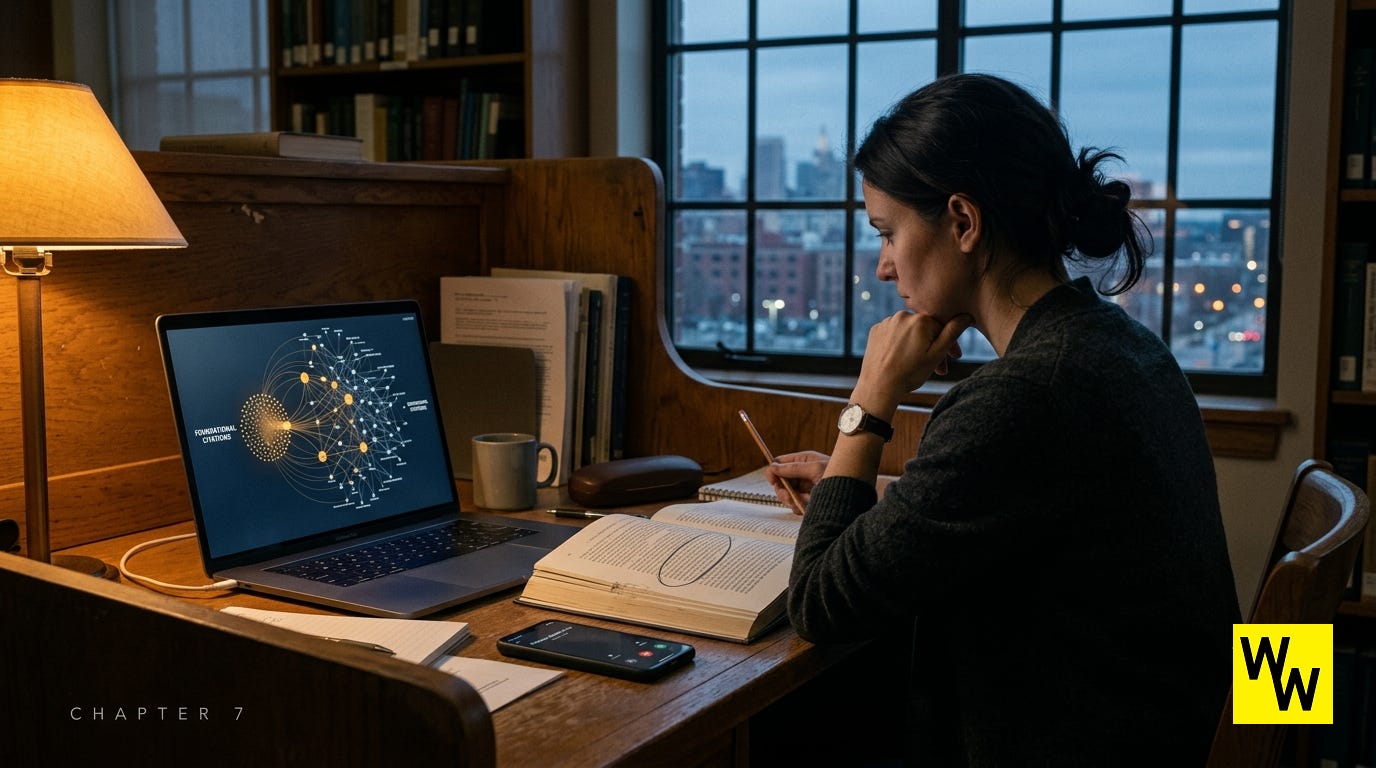
Dr. Mia Hartmann has spent 3 weeks noticing that the APL platform’s most aggressive deterrence recommendations all cite the same 3 source documents — all written by the same man, who died in 2019, whose deterrence theory rests on a Russia that stopped existing in February 2022. She calls his former collaborator on a Tuesday evening, not to confirm the problem but to understand its shape, and what she learns is worse than she expected: the dead man knew his model would fail under exactly these conditions, wrote the warning himself, and buried it in a chapter that nobody reads. The reasoning is sound. The premises are 4 years out of date. The hardest part is not finding the problem — it is walking into the room where people are proud of what they built and telling them what it’s standing on.
Read the full story on Patreon (available to both free and paid subscribers).
Lastly… what’s that over there in the Business Corner?
A double serving!
One… this short documentary about Reginald Lewis, the first black “finance bro”.
I’m still giggling at how he came home from summer camp straight to asking his mom for his money! (She had been running his newspaper delivery route for him while he was away)
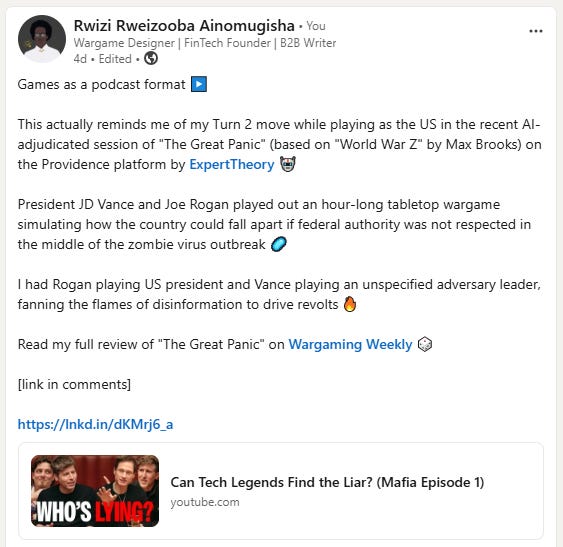
And two… this pilot episode of the Mafia podcast by Founders Fund.
It’s so great to see games emerging as a podcast format! Now we just need someone to go all the way and make a podcast where the guests don’t play parlour games but rather wargames instead…
Yours in hex,
Rwizi.
ABOUT THE AUTHOR:
Rwizi Rweizooba Ainomugisha is a freelance wargame researcher, analyst and designer. With a background of over 10 years in the B2B marketing and fintech startup spaces, Rwizi is also building Social Funds, the gamified social finance app designed to help young Ugandans budget, save, and fund their goals together.

UPDATE: Just realized that I had missed the Spent Coins Tracking Matrix and Post-Game Reflection Questions. I have now included them in the updated PDF: https://drive.google.com/drive/folders/1vb7AKUqcb5r94zKl5csKmLQoilkWzMf_?usp=sharing